From Script to Screen in 10 Days: The Adrenaline-Fueled World of Vertical Production
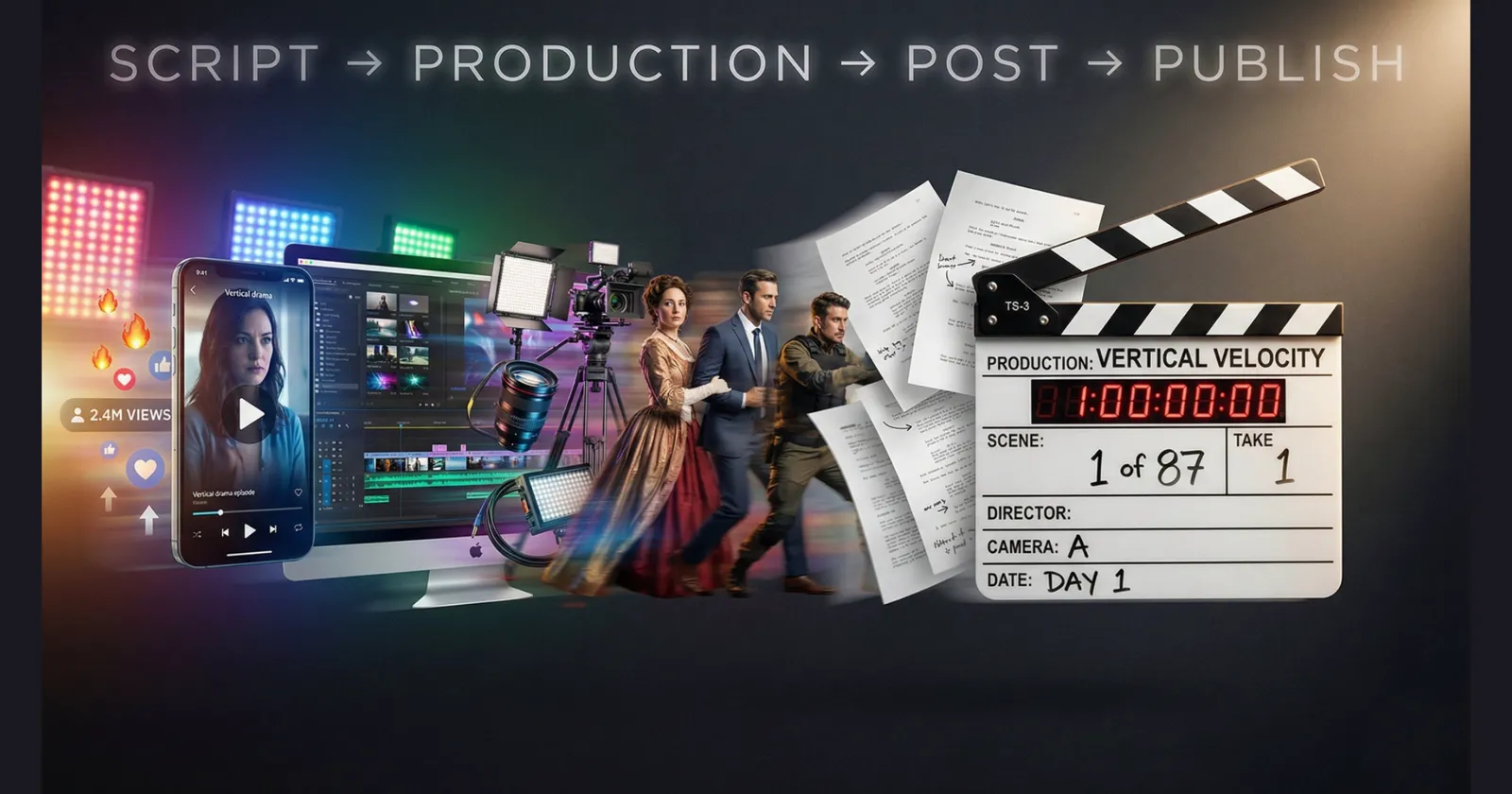
Imagine shooting a feature-length movie. Now imagine doing it in a single week.
In the traditional world of Hollywood, this sounds like a recipe for disaster. But in the exploding vertical drama industry, it is standard operating procedure. This is a sector where speed is not just a necessity. It is an art form.
As demand for "snackable" content on apps like ReelShort, DramaBox, and ShortMax skyrockets, producers have engineered a new kind of workflow. It is lean, it is intense, and it is reshaping how content is made. For producers and production managers, understanding this velocity is the key to thriving in the $8 billion microdrama market.1
Here is an exclusive look behind the scenes at how a vertical series goes from a PDF script to a viral sensation in record time.
Phase 1: The Pre-Production Sprint (Weeks 1-4)
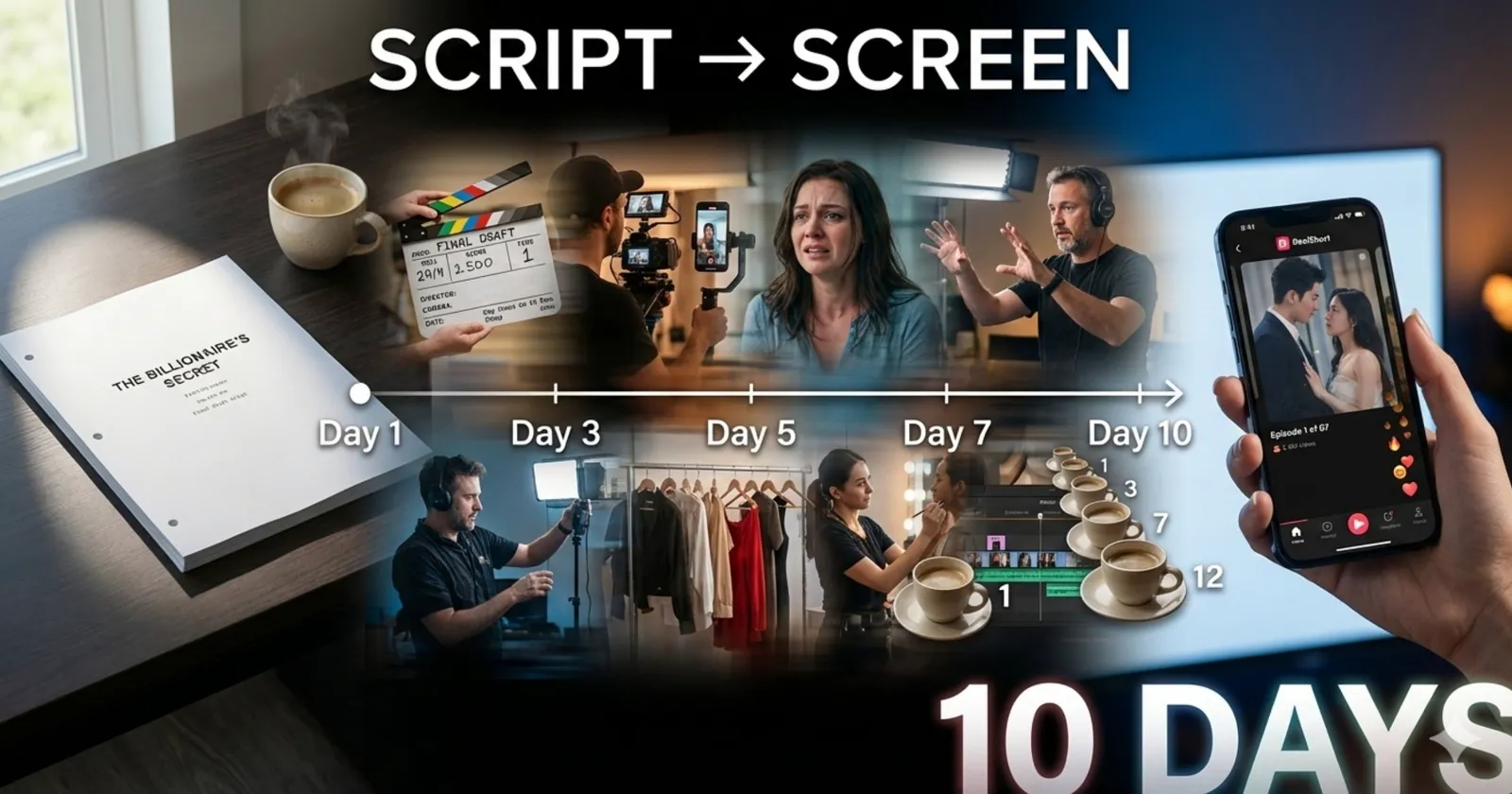
In traditional television, development can take years. In vertical drama, it takes weeks.
The process often begins with data rather than just a "good idea." Platforms analyze viewer retention rates and trending tropes like "The Secret Billionaire" or "The Alpha’s Mate" to greenlight concepts that are mathematically likely to succeed.2
Once a concept is locked, pre-production typically lasts only 3 to 4 weeks. During this time, the team must cast lead actors who have the specific "look" for vertical close-ups and secure locations that can double for multiple settings.
The "Standing Set" Strategy
Efficiency drives every decision. You rarely see a vertical drama company move the entire crew across town three times a day. Instead, they utilize "standing sets" or mansions that can serve as a billionaire’s office, a family home, and a hospital room all in one location. This minimizes travel time and maximizes shooting time.
Phase 2: The 10-Day Shoot (The Marathon)

This is where the magic and the madness happens.
A standard vertical series consists of 60 to 100 episodes, each running about 90 seconds. The total runtime is roughly equivalent to a 90-minute feature film. However, while a Hollywood feature might shoot 3 to 5 pages of script a day, a vertical drama crew crushes 15 to 25 pages a day.
The entire principal photography phase usually lasts between 6 to 10 days.
The Rhythm of the Set
To maintain this pace, the set operates with military precision. Lighting setups are designed to be flexible. Directors rarely have the luxury of twenty takes. They need actors who can deliver a usable performance on the first or second try.
This speed creates a unique energy on set. It is often described as "film school bootcamp" because you are forced to solve problems instantly. There is no waiting for the perfect cloud to pass the sun. You shoot, you move, you repeat.
The Vertical Frame (9:16)
Cinematographers face a unique challenge: the vertical frame. You cannot rely on sweeping wide shots to establish geography because they look tiny on a phone screen. Instead, the visual language is built on intimacy.
- Tight Close-Ups: The camera lives on the actors' faces. This magnifies every micro-expression, which is crucial for the emotional melodrama of the genre.
- Vertical Blocking: Actors are blocked to move toward and away from the camera, rather than side-to-side.
- Headroom: Framing must account for the user interface (comments, likes, titles) that will overlay the video on the app.
Phase 3: Post-Production and the "Hook" (Weeks 6-10)
While traditional editing focuses on narrative flow, vertical drama editing focuses on retention.
Editors are the final writers of the show. Their job is to ensure that the viewer does not swipe away. This means cutting out any "dead air." Every second must convey new information or heightening emotion.
The 3-Second Rule
The first three seconds of an episode are critical. If the hook is not immediate, the viewer is gone. Editors use rapid cuts, sound effects, and visual jolts to grab attention instantly.
The Cliffhanger Engine
The most important part of the edit is the end of the episode. This is the monetization point. The cut to black must happen at the precise moment of highest tension whether it’s a slap, a shocking reveal, or a kiss interruptus. This triggers the psychological impulse in the viewer to pay for the next 10 episodes.3
Why This Workflow is the Future

Critics might look at this schedule and assume the quality suffers. But that misses the point. The vertical production model is not about cutting corners. It is about optimizing for the medium.
It respects the audience's time. It delivers high-octane entertainment at the speed of social media. And for the crews and producers involved, it offers a volume of work that the traditional industry simply cannot match right now.
The vertical revolution is here. It is fast. It is loud. And it is hiring.
Ready to join the fast lane?
Whether you are a producer looking for a crew that can handle 20 pages a day, or a director ready to frame for 9:16, VerticalDramaJobs.com is your hub. Register today to connect with the teams building the future of entertainment.