We Need to Talk About the Money in Micro Drama
We run a job board for vertical micro drama. We believe in this industry. We think it's creating real opportunities for actors, writers, and crew who've been shut out of traditional Hollywood for years. But we're not going to sit here and pretend everything is fine.
Because it isn't.
In the last few years, GoFundMe campaigns for working actors have become disturbingly common. Not unknown actors. Not people who failed to build careers. Actors with major network credits, decades of work, and union membership. The ALS Association says in-home care alone can exceed $669,000. Cancer treatment averages $150,000 or more. Even with SAG-AFTRA health coverage and residual income, serious illness can overwhelm the system that's supposed to protect performers.
That's traditional Hollywood where residuals exist, where union health plans exist, where there's supposed to be a safety net. And still, working actors with major credits end up needing crowdfunding campaigns to cover medical bills or support their families.
Now imagine the actors, writers, and crew in vertical drama and micro drama, where none of those protections exist.
No residuals. No pension contributions. No long-term health coverage. You work, you get your check, and the platform earns revenue from your face and your words for years. If you get sick, if the work dries up, if life happens, that's your problem.
We see five structural problems that need honest conversation:
Before we walk through these, we want to acknowledge something important: platforms are not swimming in excess profit. User acquisition costs are brutal, sometimes $2-$4 per viewer against average revenue of roughly $2 per subscriber. Content risk is real. Many platforms are operating at thin margins or at a loss. The ask here isn't to redistribute money that doesn't exist. It's to build structures now so that when margins improve, and they will, as the market matures, creators participate in that upside.
- Zero residuals. Actors and writers get paid once. Platforms earn revenue from their work forever.
- No healthcare safety net. No pension contributions, no health plan eligibility, nothing for the long term.
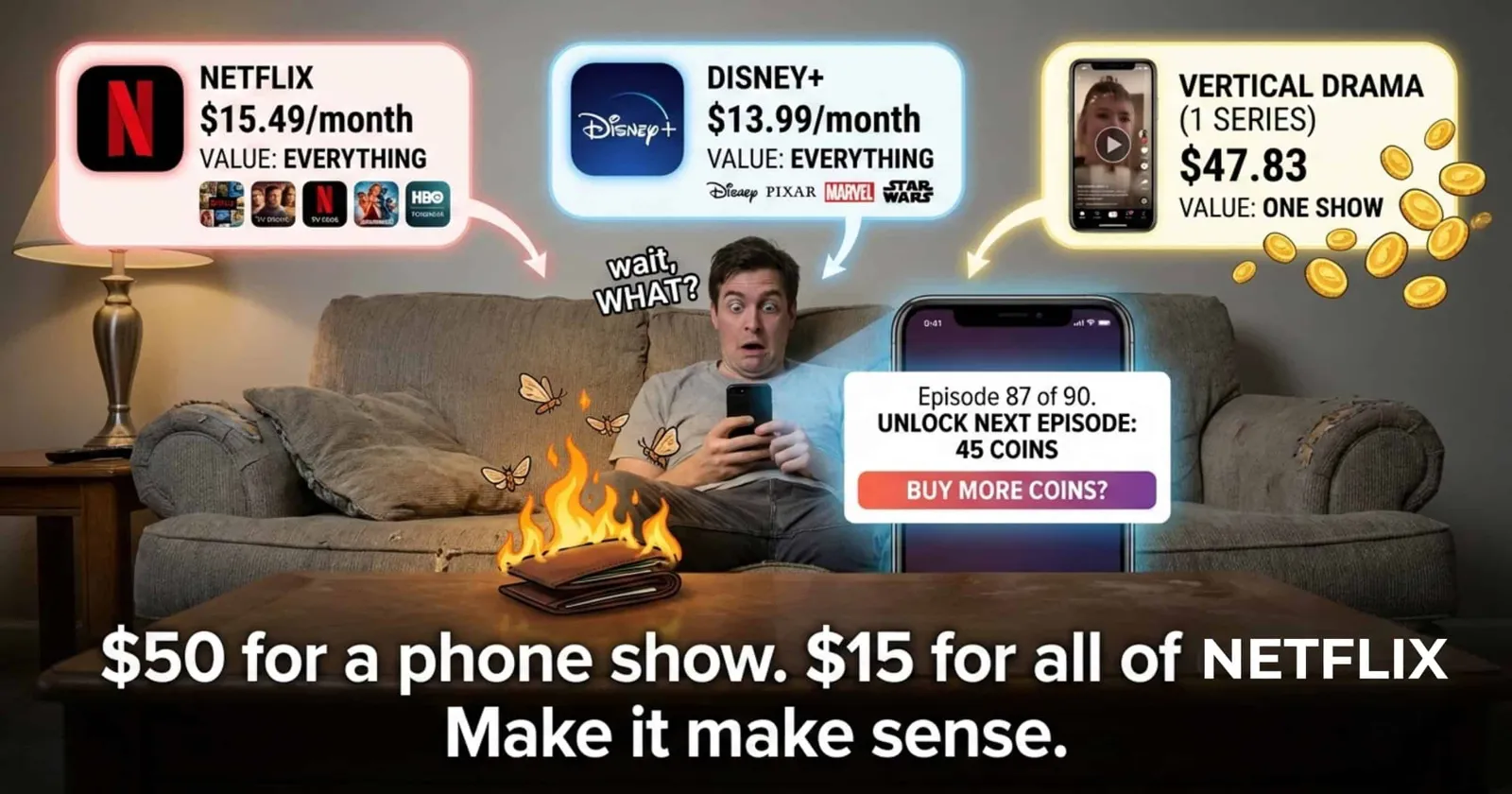
- Unsustainable viewer pricing. Fans pay $15-$50+ to finish a single series through opaque coin-based pricing that maximizes per-viewer spend.
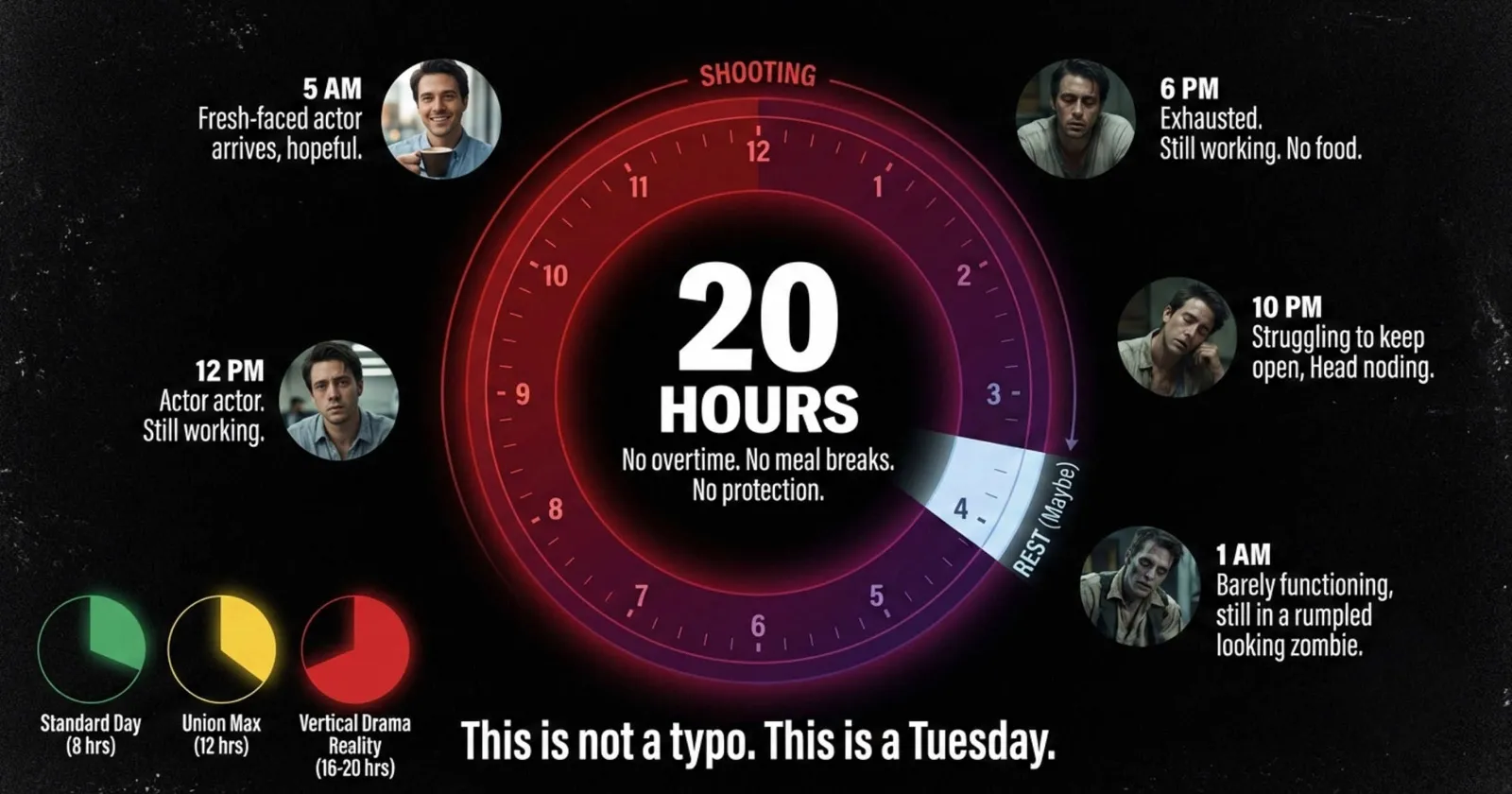
- Grueling conditions. 16-20 hour shoot days. No overtime. No meal breaks.
- Writer buyouts. Scripts purchased with no credit, no residuals, no backend.
Let's walk through each one.
The Healthcare Crisis Nobody's Talking About
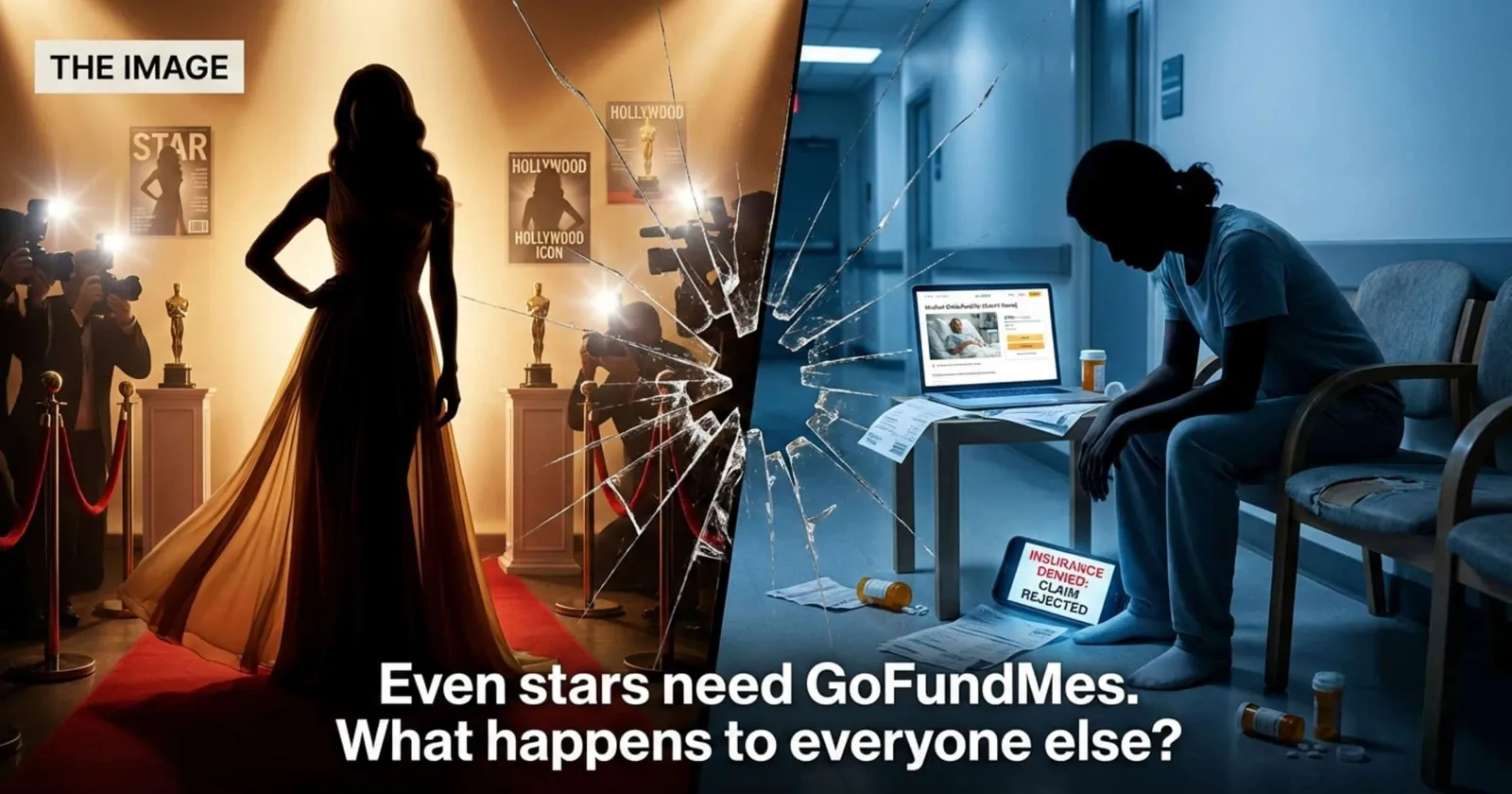
Here's something most people outside the industry don't understand: even successful actors with long careers struggle with healthcare costs. GoFundMe campaigns for actors with major credits have raised hundreds of thousands of dollars in recent years not because these performers were irresponsible, but because serious illness can exceed what union health coverage and residual income can sustain.
These are performers who had residuals. Who had SAG-AFTRA health coverage. Who had decades of network television credits. If that system can't fully protect them, what chance does a vertical drama actor have?
How Traditional Hollywood Handles Healthcare
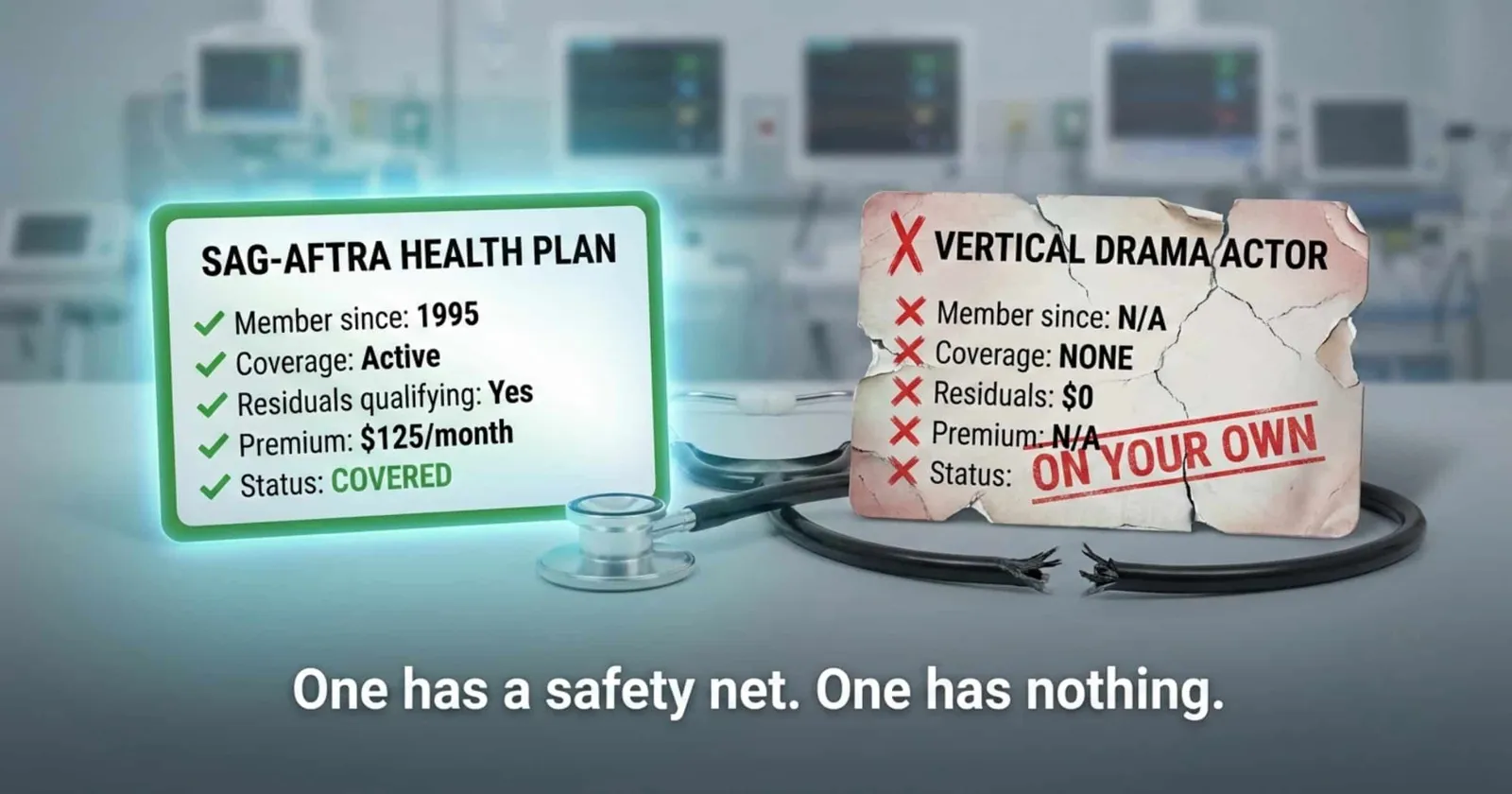
In the traditional system, SAG-AFTRA members qualify for health insurance by earning at least $26,000 per year in covered work. Residual payments count toward that threshold. So when your show airs in reruns, streams on Netflix, or gets sold internationally, those residual checks help keep your health coverage active even when you're between jobs.
The premiums are good too. $125/month for a member, $249/month for a family of four. Compare that to the average US worker paying $6,680 a year for family coverage.
But even this system has cracks. Long-term conditions requiring 24/7 nursing care, specialized equipment, or extended treatment often exceed what insurance covers. And that's for performers who are among the lucky ones: those with decades of credits and steady residual income.
What Do Vertical Drama Actors Get? Nothing.
In micro drama, almost all productions are nonunion. That means:
- No SAG-AFTRA health plan eligibility
- No pension contributions
- No residual payments to keep coverage active between jobs
- No long-term disability protections
- No employer-sponsored healthcare of any kind
You get your day rate. That's it. If you're a vertical drama lead making $1,000-$1,500/day for a 10-day shoot, you walk away with $10,000-$15,000. Good money for two weeks. But there's zero long-term safety net. No continued income when the show streams for years. No health plan. No pension.
For young actors in their 20s, this might feel fine. But careers are long and unpredictable. Bodies break down. Illnesses happen. And when they do, that $15,000 from three years ago doesn't cover an ER visit, let alone long-term care.
And It's Not Just Actors
We need to talk about the crew too. In traditional Hollywood, below-the-line workers (camera operators, editors, sound engineers, production coordinators) don't receive residuals directly like actors and writers do. But residual payments fund the Motion Picture Industry Pension and Health Plans, which cover IATSE, Teamsters, and Basic Crafts members.
That system is already in trouble. The shift from physical media to streaming devastated residual income flowing into crew pension plans. In 2012, IATSE projected nearly $1 billion in residual income through 2015. Then DVDs died and streaming took over. The pension plan dropped to 67.4% funded, hitting "critical status" under federal law.
In vertical micro drama? The crew get nothing. No pension contributions. No health plan funding. No long-term protections at all. The gaffer who lights your set for 16 hours straight gets a day rate and goes home. If the show earns $5 million over the next three years, that gaffer sees zero.
The Residuals Gap: One-Time Pay in a Long-Tail Business
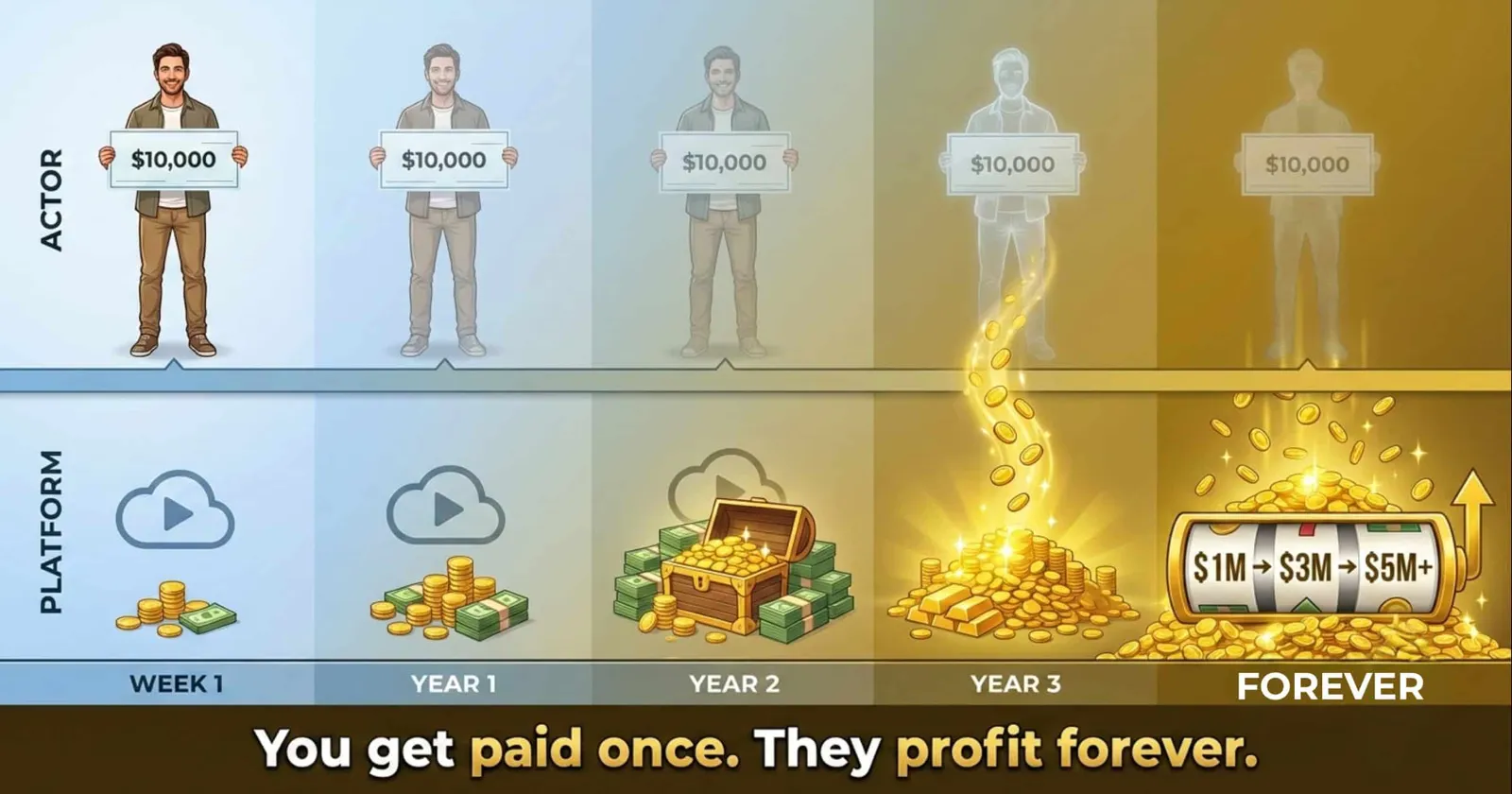
ReelShort has confirmed its actors do not receive residuals. DramaBox, ShortMax, FlexTV: same thing. You get your day rate for the shoot, and that's it. The show can generate millions of views, get dubbed into 50 languages, earn revenue for years, and the people who made it see nothing beyond their initial paycheck.
| Who | Gets Paid | For How Long |
|---|---|---|
| Lead Actor | $10,000-$15,000 | Production period only |
| Writer | $2,000-$5,000 per script | On delivery only. |
| Crew Member | $250-$1,000/day | Production period only |
| Supporting Actor | $1,000-$3,500 | Production period only |
| Platform | Millions per series | Ongoing. As long as it streams |
| Production Company | Revenue share w/ platform | Ongoing. Revenue share deal. |
The people taking the creative risk, the ones whose faces, voices, and labor are the product, get a one-time payment. The platforms and production companies collect revenue indefinitely. That structure functions more like a full buyout than an ongoing creative partnership and as the industry matures, that distinction will matter. And for millions of workers who say what's the big deal, this is how it is in regular jobs not entertainment you have to understand the fundamentals of the business.
A regular job, you perform a task which produces an output and then you get paid for performing the task regardless of if the output succeeds or fails. You may or may not get contributions to your 401K and a pension (most pensions are practically gone in corporate America).
In the entertainment business, it's creative work so there may be long stretches where the artist makes no income while working on their craft, looking for work or creating their art. But once the output is created then depending on the value of the art it will be enjoyed for many years to come.
As a result, the artist gets paid residuals, which compensates not only for the time where they were making and creating the art without any revenue, but the present and the continuous future enjoyment of the art by the audience. This is why unions fought so hard for residuals historically and continue to in streaming negotiations.
The Affleck Math: Why Digital Should Make This Better, Not Worse
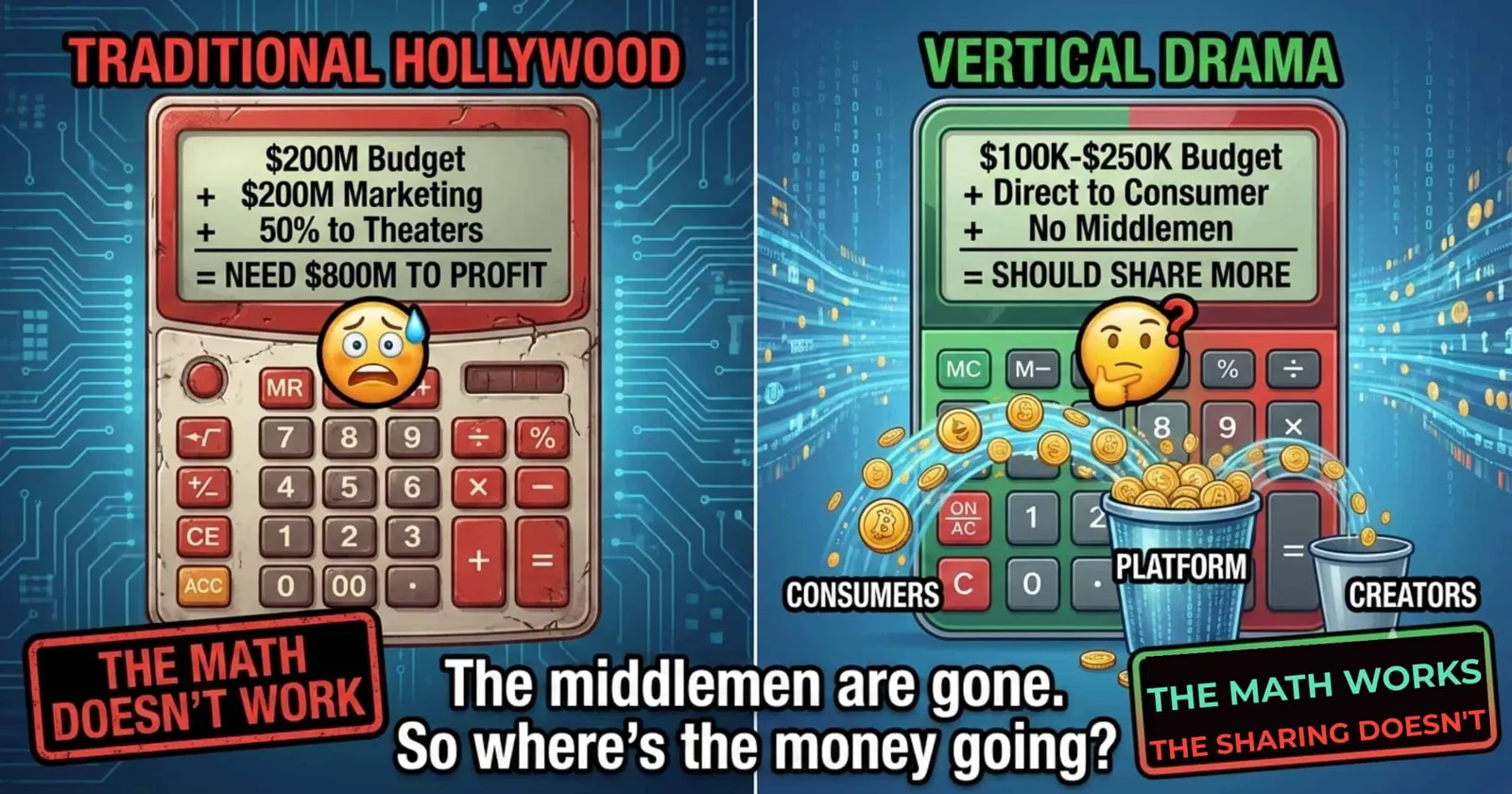
Ben Affleck and Matt Damon said something on the All the Smoke podcast recently that perfectly frames why this matters. They broke down the economics of traditional moviemaking: a $25 million movie costs roughly another $25 million to market. Theaters keep about 50% of box office gross. So that $25 million movie needs to gross $100 million at the box office just to break even. That's a 4x multiplier.
Scale that up. A $200 million blockbuster needs another $200 million in marketing, then splits revenue with theaters. You're looking at needing roughly $800 million at the box office before anyone sees real profit. That's the math that makes Hollywood "dying," in Affleck's words.
Now look at vertical drama. No theaters taking 50%. No $200 million marketing budgets. Production costs run $50,000-$250,000 per series. Distribution is direct-to-consumer through apps. The middlemen are gone. The economics should be dramatically better for everyone involved.
Yet here's the catch: at MIP London in 2026, execs revealed that platforms often burn up to 90% of total budgets into marketing and user acquisition by testing thousands of trailer variants on social media to drive downloads, leaving just a tiny fraction for actual production. As Timothy Oh of COL Group put it, "Ninety percent of the budget goes to marketing." The lean model benefits platforms and companies with indefinite revenue streams, but creators and crew still walk away with one-time day rates and no share of the long-term upside.
So where is the margin going?
ReelShort generated $214 million in revenue in 2024. DramaBox generated $217 million. If the traditional Hollywood profit squeeze (theaters, marketing, distribution) is removed, shouldn't some of that freed-up margin flow back to the people who actually make the content? You would think so but the truth is even the platforms are feeling the squeeze.
They have to cough up large sums of money to Meta, Google and all the tech platforms just to acquire users at sometimes $2-$4 per viewer. There’s a report floating on the internet that says ReelShort makes on average $2 in revenue per subscriber. So if it costs you $2 to generate $2 in revenue you can see pretty quickly that the platforms have to solve 2 huge problems at once: a) reduce customer acquisition cost and b) increase revenue.
Increasing revenue can be done using three primary methods: increasing number of customers, increasing the frequency of customer purchases, and lastly increasing the average order value of each user. For now it seems the margin just isn't there as the primary lever being pulled is increasing how much viewers spend. And it's only a matter of time before viewer gets tired of being squeeze and starts seeking alternatives.
The Affleck Math
Traditional Hollywood: $200M budget needs $800M gross to profit because of marketing and theater splits. Vertical drama: $100-300K budget goes direct-to-consumer with minimal overhead. The math says the margin should be there but the economics shows it isn’t. The question is when the margin arrives who gets it?
Despite all the issues the money keeps growing. Analyst house Omdia estimates global microdrama revenues hit $11 billion in 2025 and will reach $14 billion by end of 2026. By 2030, that number will cross $22 billion. The U.S. is the second-largest market after China and Omdia predicts it will account for 50% of all microdrama revenue outside China by year end.
The Artists Equity Model: Proof It Can Work
Though there's just one primary method of earning right now for most cast and crew, Matt Damon and Ben Affleck have shown that if there's the will to act then there may also be a second way to help make compensation a little fairer for all. Affleck and Matt Damon's production company, Artists Equity, just did it with their Netflix film The Rip.
Instead of the usual upfront-only payments, they negotiated a performance-based bonus pool shared across all 1,200 cast and crew members. Not just the stars and the director. Everyone. The gaffer. The PA. The makeup artist. Five tiers of bonuses based on viewership performance. The Rip hit 41.6 million views in its opening weekend. Everyone on that production is getting paid again.
If Affleck and Damon can negotiate revenue sharing for 1,200 crew members on a Netflix film, micro drama platforms can figure out a way to share revenue with the 30-50 people who make their series. The economics are simpler. The distribution chain is shorter. The team sizes are smaller. As margins improve, the opportunity to build revenue-sharing structures will only get clearer.
The Viewer Problem: $15-$50 to Watch a Phone Show
Now let's talk about the fans, because this side of the equation is just as broken. One of the biggest complaints from fans per the Vertical Drama Love Fan Survey 2025 which collected data from 1,670 respondents is the mounting cost of watching vertical dramas, with some fans citing it as a reason they now watch fewer shows.
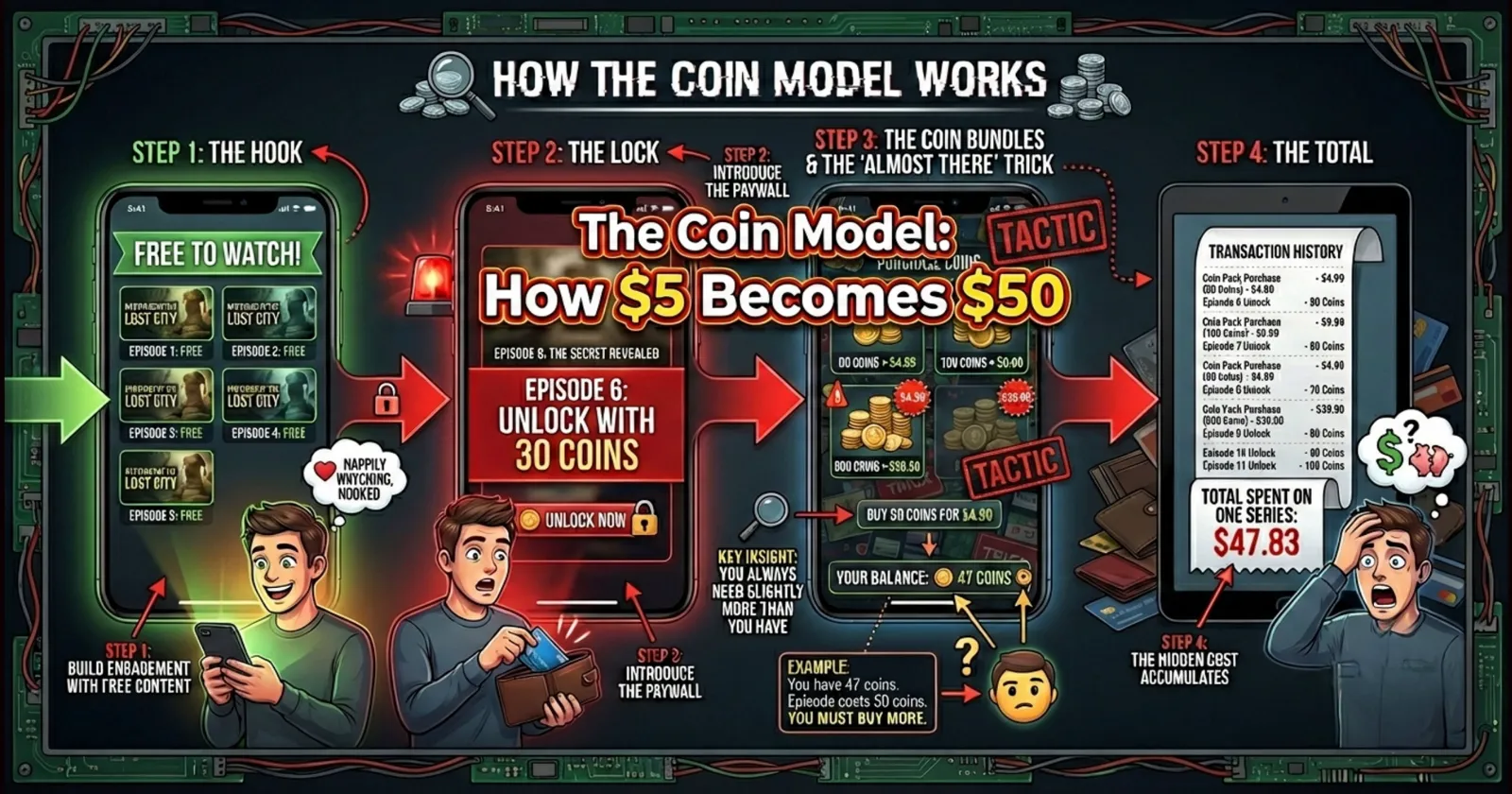
Vertical drama platforms use a coin-based pricing model borrowed from mobile gaming. The first few episodes are free to draw viewers in. Then you need coins to unlock the rest. And the pricing structure can be difficult for viewers to navigate.
How the Coin Model Works
- You buy coins in bundles ($0.99 to $99.99)
- Each episode costs a certain number of coins to unlock
- Some apps use two currencies ("coins" and "bonus coins") to create an illusion of value
- The math often works out so viewers need slightly more coins than their last purchase provided, leading to incremental spending
- By the time you finish a 90-episode series, you've spent $15-$50
| Platform | Cost | What You Get | Model |
|---|---|---|---|
| Netflix | $15.49/month | Entire library, unlimited | Subscription |
| Disney+ | $13.99/month | Entire library, unlimited | Subscription |
| ReelShort (1 series) | $15-$50+ | One series only | Pay per episode |
| Heavy viewer (3-4 series/mo) | $45-$150+/month | 3-4 series | Per episode |
To put that in context, a fan who watches 3-4 vertical drama series a month could be spending more than their Netflix, Disney+, and Hulu subscriptions combined, for content produced at a fraction of the cost.
This Isn't Sustainable
We're in a cost-of-living crisis. Inflation is eating into people's entertainment budgets. Consumers are already cutting streaming subscriptions because they can't justify $15/month. It's worth asking whether they'll continue paying $40-$50/month for mobile-first dramas at scale.
The early adopters will. The hardcore fans will. But for vertical microdramas to grow into the mainstream (and that's what every platform wants), the pricing has to come down. TikTok's PineDrama, which launched in January 2026, is ad-supported and free. That's the model that will scale. The coin-per-episode model is a short-term monetization strategy that may struggle to retain mainstream audiences as competition increases.
And here's the tension worth examining: viewers are paying premium prices for content while the people who made that content receive one-time compensation. Platforms carry real costs user acquisition, technology infrastructure, content risk but as the industry scales, the current balance between platform revenue and creator compensation deserves reexamination. It's worth noting that even actors can't watch their own verticals for free they have to subscribe like everyone else.
A fan pays $40 to finish a series. The lead actor who carried those 90 episodes earned $10,000 total with no ongoing participation. The platform continues generating revenue from both the viewer and the content. As revenue grows, revisiting that equation makes business sense not just ethical sense.
Working Conditions: Where the Industry Needs to Catch Up
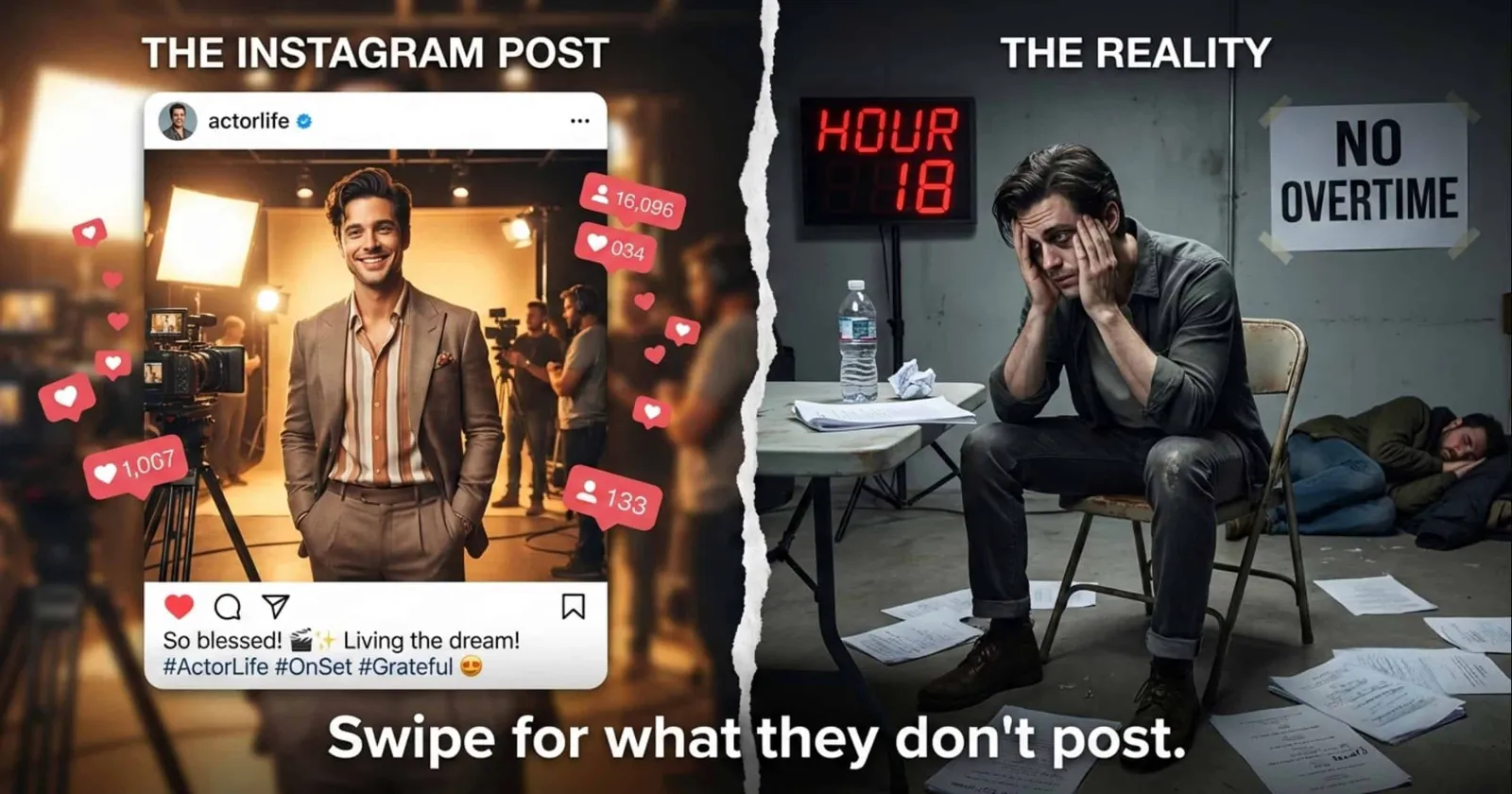
The Wrap published an investigation into labor practices across the microdrama sector. Their findings raised serious questions.
16-20 Hour Shoot Days
Because productions are squeezing entire seasons (60-90 episodes) into 7-10 shooting days, the daily workload is extreme. Multiple sources report 16, 18, even 20-hour shoot days. No designated meal breaks. No overtime. In traditional film, union rules cap the workday, mandate meal breaks every 6 hours, and require turnaround time. In nonunion vertical drama? The schedule is whatever the production says it is.
International Production and Labor Standards
Some productions shoot internationally, often in Asia, where local labor regulations differ from US standards. Once on set in another country, US workplace protections don't automatically apply. The Wrap reported actors working in conditions that would fall below American workplace standards. This isn't representative of every production, but it's a pattern worth addressing.
Writer Credit and Compensation Gaps
LA-based writers have reported scripts being recycled without credit or additional payment, and buyout contracts that transfer all rights with no ongoing participation. Some screenwriters have reported not receiving proper credit for work that generated millions of views. The writer delivers, the production acquires full rights, and the show earns revenue for years without attribution to the original creator.
The Union Participation Gap
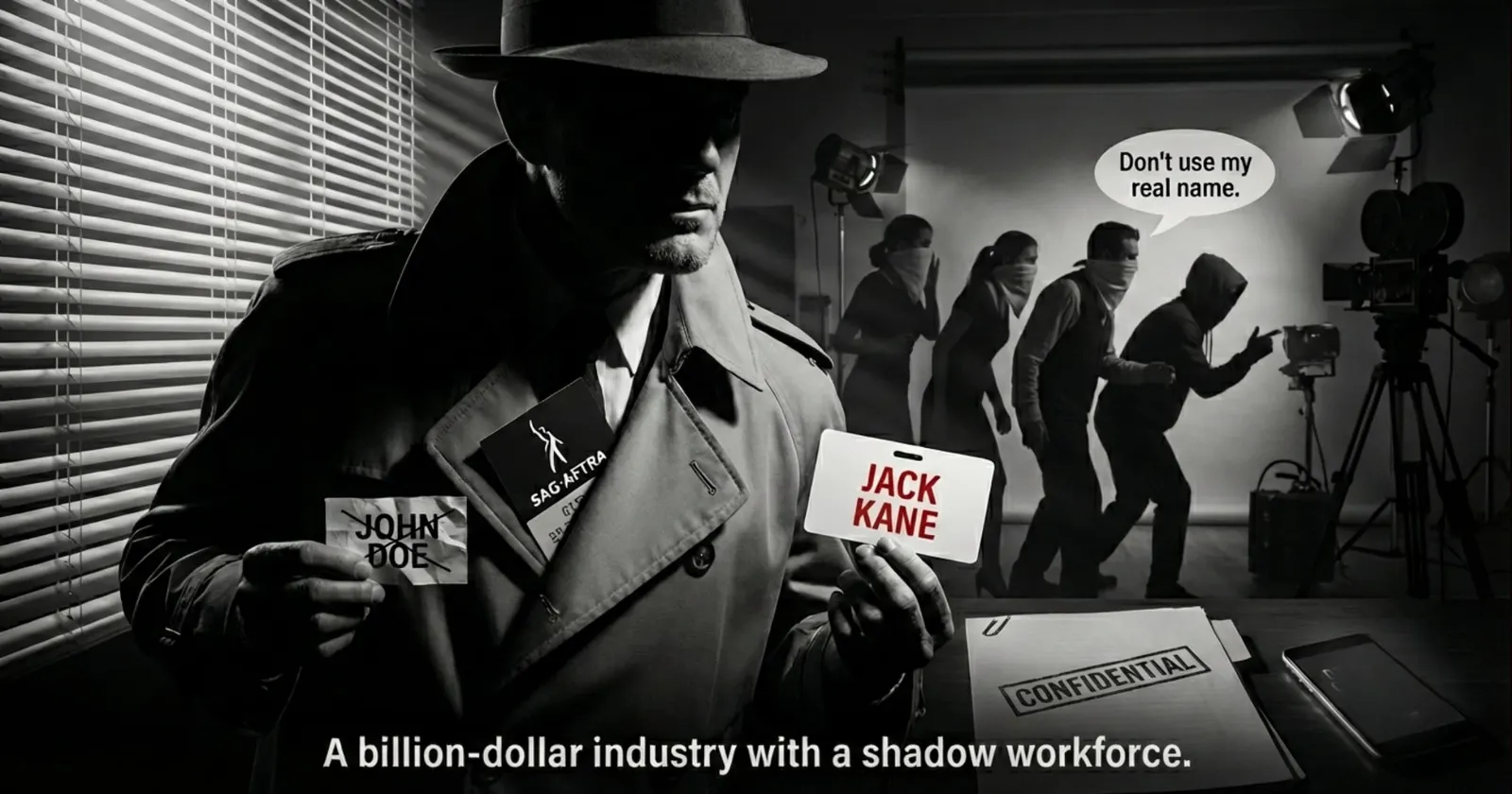
Because most vertical dramas are nonunion, SAG-AFTRA members technically can't participate without violating union rules. So some actors go "Fi-Core" (Financial Core). Others work under fake names. A former DramaBox in-house writer confirmed that union workers use pseudonyms on these productions. There's a significant number of professionals navigating union membership rules to participate in this market which suggests the current framework isn't matching industry reality.
What's Being Done (and Why It's Not Enough Yet)
SAG-AFTRA's Verticals Agreement
In October 2025, SAG-AFTRA launched a Verticals Agreement for productions under $300,000. The minimums: $250/day for leads, $164/day for everyone else. Plus P&H contributions, overtime protections, and safety standards. On paper, progress. In reality? One casting head told Variety the agreement "is not usable" for most vertical companies. The minimums are below what nonunion productions already pay. And adoption has been slow.
The WGA Reminder
The WGA reminded members that vertical drama writing is already covered under their minimum basic agreement. But they also warned members not to work for non-signatory companies. Since nearly every vertical drama company is non-signatory, the protection exists in theory but barely in practice.
The Coming Negotiations
The WGA contract expires May 1, 2026. SAG-AFTRA and DGA deals expire June 30. AI and residuals from streaming will be major bargaining points. Whether vertical drama gets specific attention in these negotiations could shape the format for the next decade.
What Actually Needs to Change
We're not anti-platform. We're not anti-vertical drama. We literally run the job board. But if we want this format to sustain itself and build long-term creative relationships with its talent, here's what needs to happen:
1. Revenue Sharing for Hit Content
When a series crosses a revenue threshold (say $500K or $1M), the people who made it should participate in that success. Not traditional residuals necessarily, but some mechanism. NextScene already does it with writers: $2,000 per script plus 1% of net revenue for the life of the show. Affleck and Damon did it with The Rip: performance bonuses for all 1,200 crew. If they can do it, vertical drama platforms can too.
2. Health and Pension Contributions
Even on nonunion productions, companies can contribute to performer healthcare funds. It doesn't have to be SAG-AFTRA's plan specifically. But some mechanism for long-term health coverage needs to exist. The goal should be ensuring that no vertical drama professional ever needs to crowdfund their own medical care. Building protections now is far easier than retrofitting them later.
3. Revenue Transparency
Performers should know how much their show earned. Right now, you do the work and the show disappears behind proprietary data. If your show made $3 million, you should know that. Transparency creates accountability.
4. Fair Pricing for Viewers
The coin-based monetization needs reform. Viewers should know upfront what a series costs. No hidden currencies. No two-tier coin systems designed to trigger purchases. PineDrama (TikTok's ad-supported model, free to watch) is proving alternatives work. The coin model extracts maximum revenue from early adopters but won't scale to mainstream audiences.
5. Maximum Shoot Day Protections
12-hour max shoot days. Mandatory meal breaks every 6 hours. Minimum 10-hour turnaround. These aren't radical demands. They're standard in every other corner of professional film production.
6. Writer Credit and Anti-Theft Protections
Every writer should receive credit on the work they wrote. Scripts should not be recycled or resold without the writer's knowledge and compensation. Buyout contracts should include clear terms about what rights transfer and for what price.
7. Union Agreements That Fit the Format
The SAG-AFTRA Verticals Agreement is a start, but production companies aren't adopting it. The unions need to make signatory status genuinely attractive. Tax incentives. Expedited processes. Tiered agreements that scale protections with budget. Meet the industry where it is.
8. Extend Residual Thinking to Crew
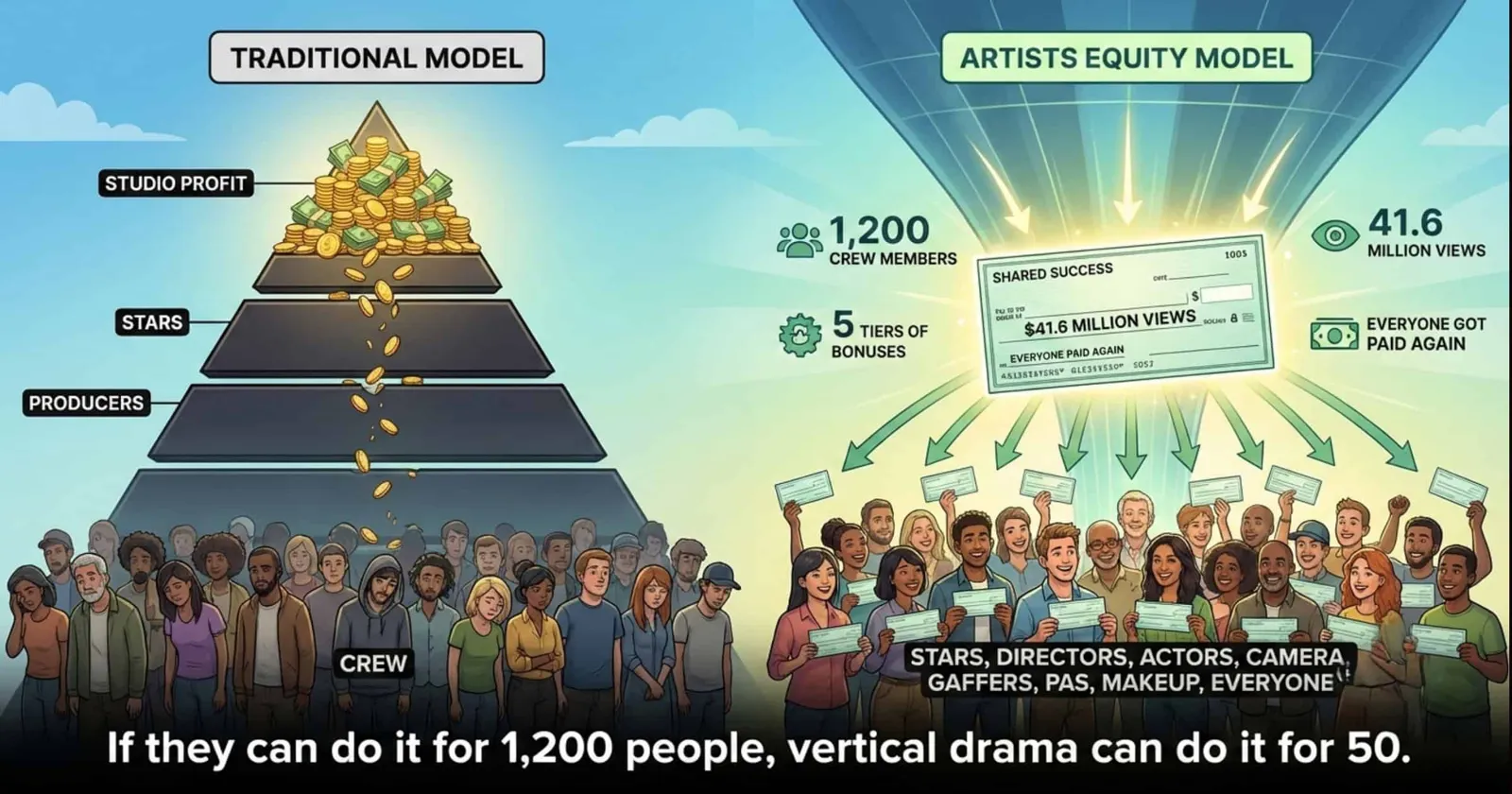
In traditional Hollywood, crew residuals fund pension and health plans through IATSE. Streaming already broke that system (pension plans dropped to 67% funded when DVD income collapsed). Vertical drama has a chance to build something better from the ground up. Revenue-sharing models like Artists Equity's The Rip prove that including all 1,200 people on a production is possible. Vertical drama sets are 30-50 people. The math is even simpler.
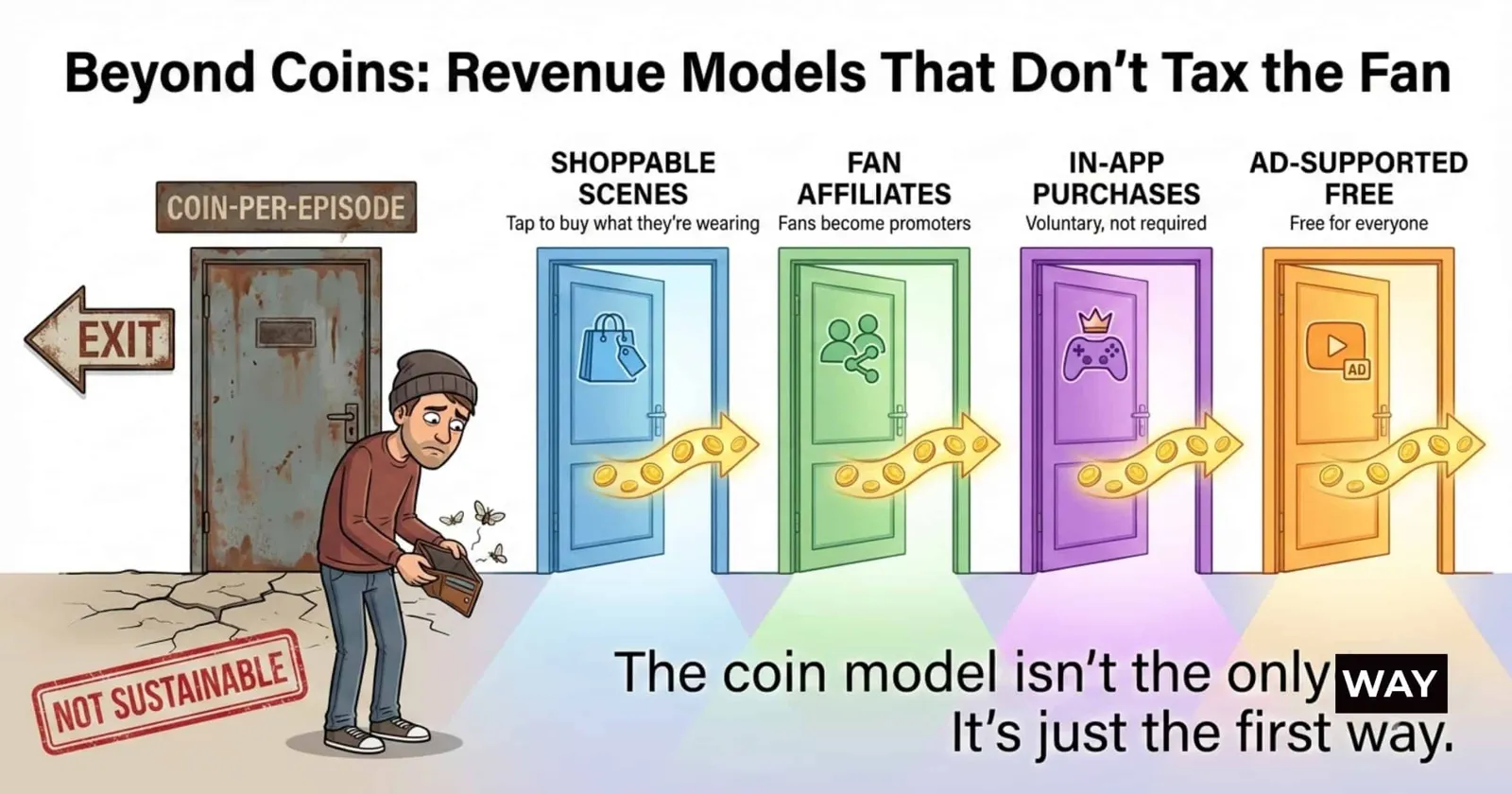
Here's where we shift from diagnosis to solutions. Because the coin-per-episode model isn't the only way to monetize vertical drama. Gaming figured this out years ago. Social commerce is already proving it. The vertical drama industry just hasn't caught up yet.
We think there are at least four revenue models that could supplement or replace the current system, reducing pressure on fans while actually increasing total revenue for platforms.
1. Shoppable Scenes: Social Commerce Meets Storytelling
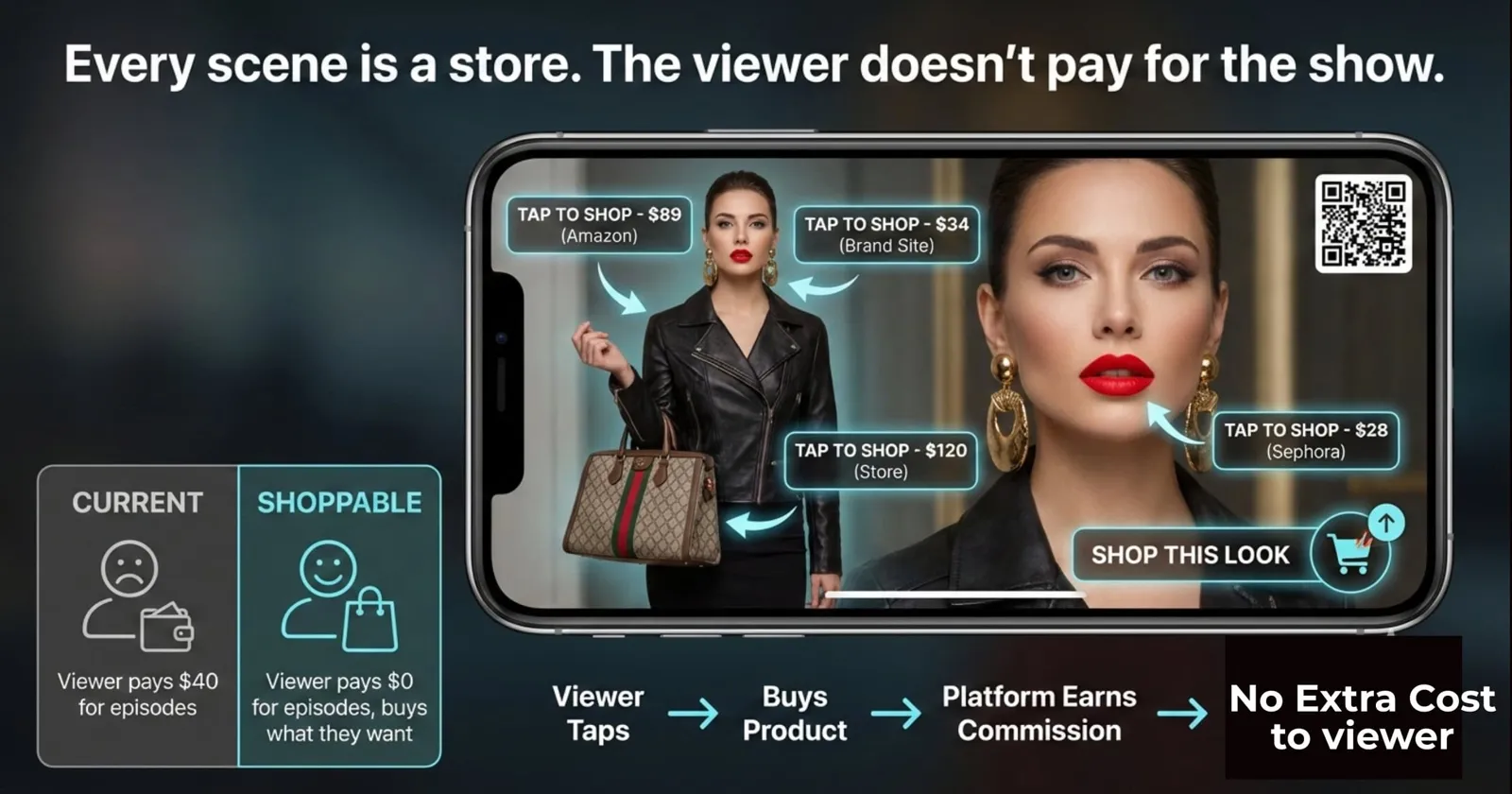
Every scene in a vertical drama is a product placement opportunity, but not the cringe kind where the camera lingers on a Pepsi can for five seconds. We're talking organic, viewer-initiated commerce.
Imagine this: the lead actress walks into a scene wearing a leather jacket. You tap or scan a QR code at the end of the episode. It takes you to an Amazon affiliate page where you can buy that exact jacket (or a similar one). The platform earns a commission. The viewer gets what they actually want. Nobody feels like they just watched an ad.
This is already happening in Chinese short drama apps. Crazy Maple Studio's ReelShort has experimented with brand integrations. But nobody has built a full shoppable layer yet. Wardrobe, props, locations, music. Every element of production is a potential revenue stream.
- How it works: Tag products in each scene. End-of-episode "shop this look" screen or in-app product overlay. Affiliate links to Amazon, brand partner stores, or platform-owned merchandise.
- Revenue potential: Amazon affiliate commissions run 1-10% depending on category. Fashion averages 4%. A series with 10 million views converting even 0.5% of viewers at $30 average order = $150,000 in affiliate revenue per series. That's real money that doesn't come from the fan's entertainment budget.
- Who benefits: Platform gets a new revenue stream. Fans get a seamless shopping experience. Brands get highly targeted product placement. And actors become walking billboards who could negotiate wardrobe endorsement fees on top of their day rate.
2. Fan Affiliate Programs: Turn Viewers Into Promoters
Right now, vertical drama platforms spend millions on Facebook and Instagram ads to acquire new viewers. ReelShort's parent company Crazy Maple reportedly spent heavily on Meta ads in 2024 to fuel growth. That's significant spend flowing to third-party ad platforms rather than being reinvested in the content ecosystem.
What if platforms redirected some of that ad spend to the fans themselves?
A fan affiliate program works like this: you share a referral link to a series you love. When someone clicks your link and starts watching (or makes their first coin purchase), you earn a reward. Free coins, a small cash payout, early access to new series, whatever.
- Why it works: Word-of-mouth is already how most people discover vertical drama. TikTok clips and Instagram Reels drive huge organic traffic. Formalizing this with referral incentives turns passive sharing into active promotion. Gmail grew with word of mouth referrals when it launched.
- The math: If a platform's customer acquisition cost through Meta ads is $3-$8 per new viewer, paying fans $1-$2 per referred viewer is dramatically cheaper and more authentic. The fan does the marketing. The platform saves money. The new viewer trusts a personal recommendation over an ad.
- Gaming precedent: Mobile games have used referral programs for years. Clash of Clans, Roblox, Fortnite all incentivize players to recruit friends. The model is proven. Vertical drama just hasn't adopted it yet.
3. In-App Purchases Beyond Episodes: The Gaming Playbook
Roblox made $3.6 billion in 2024 selling virtual skins, accessories, and experiences. Minecraft sells texture packs and worlds. Fortnite sells dances and outfits. None of these are the core gameplay. They're enhancements that players buy because they want to, not because they have to.
Vertical drama could adopt the same model. Not locking episodes behind paywalls, but offering optional paid extras that fans choose to buy:
- Character skins and avatars. Let fans create profile avatars based on their favorite characters. Charge $1-$3 per custom skin. Pure margin.
- Behind-the-scenes content. Exclusive making-of clips, bloopers, actor Q&As for $0.99-$2.99. Fans who just spent 90 episodes invested in characters will pay for bonus content.
- Alternate endings. Some interactive fiction apps already offer choose-your-path stories. Vertical drama could offer alternate endings or "what if" episodes as premium content.
- Digital collectibles. Limited edition character cards, scene stills, signed digital posters. Not NFTs (that ship has sailed). Just digital merch, like concert programs for the streaming age.
- Fan-voted story decisions. Pay $0.99 to vote on a plot twist in a live series. Fans feel ownership. Platform earns engagement and revenue simultaneously.
The key: all of these are voluntary. The episodes themselves should be accessible. The premium stuff is for superfans who want to go deeper. This is how gaming makes billions without making the core experience feel exploitative.
4. Ad-Supported Free Tiers (The PineDrama Model)
We mentioned TikTok's PineDrama earlier. Launched January 2026. Completely free. Ad-supported. And it removes the biggest barrier to mainstream adoption: the price tag.
An ad-supported tier doesn't have to replace paid viewing. It can coexist. Offer a free, ad-supported version for casual viewers. Offer an ad-free premium experience for hardcore fans at a flat monthly subscription. This is literally what every major streaming service (Hulu, Peacock, Paramount+) has converged on. Vertical drama platforms are the only ones still using the coin-per-episode model as their primary revenue driver.
The math actually works better for platforms too. A viewer who watches 90 episodes with a 30-second pre-roll ad on each episode generates significant ad revenue. At a $15-$25 CPM (cost per thousand impressions), 90 ad views from one viewer equals $1.35-$2.25 per viewer. Scale that to millions of viewers and the numbers are massive, without asking any single fan to pay $40.
The gaming industry figured out that giving the core experience away for free and selling optional extras generates more total revenue than charging for everything upfront. Vertical drama is still running the old playbook. The platforms that adopt gaming-style monetization first will win the next wave of viewers.
What All of This Means
Combine these models and the picture changes completely. Shoppable scenes generate affiliate revenue. Fan referral programs reduce customer acquisition costs. In-app purchases create high-margin voluntary spending. Ad-supported tiers remove the price barrier for mainstream adoption.
The total revenue per viewer actually goes up while the direct cost to the fan goes down. That’s not wishful thinking. That’s the model that made gaming a $187 billion industry. Vertical drama can learn from it.
And there's a distribution gap waiting to be filled. Traditional TV distributors like Fremantle, ITV Studios, and Banijay have no strategy for vertical drama. They told Deadline they don't see it as compatible with their sales model. That means the entire distribution infrastructure is being built from scratch, and whoever figures out new monetization models first gets to shape how this industry works.
And here's the best part: if platforms are generating more total revenue through diversified models, the argument against revenue sharing with talent gets a lot weaker. More money flowing in means more money to share.
The Other Side: Why This Industry Still Matters
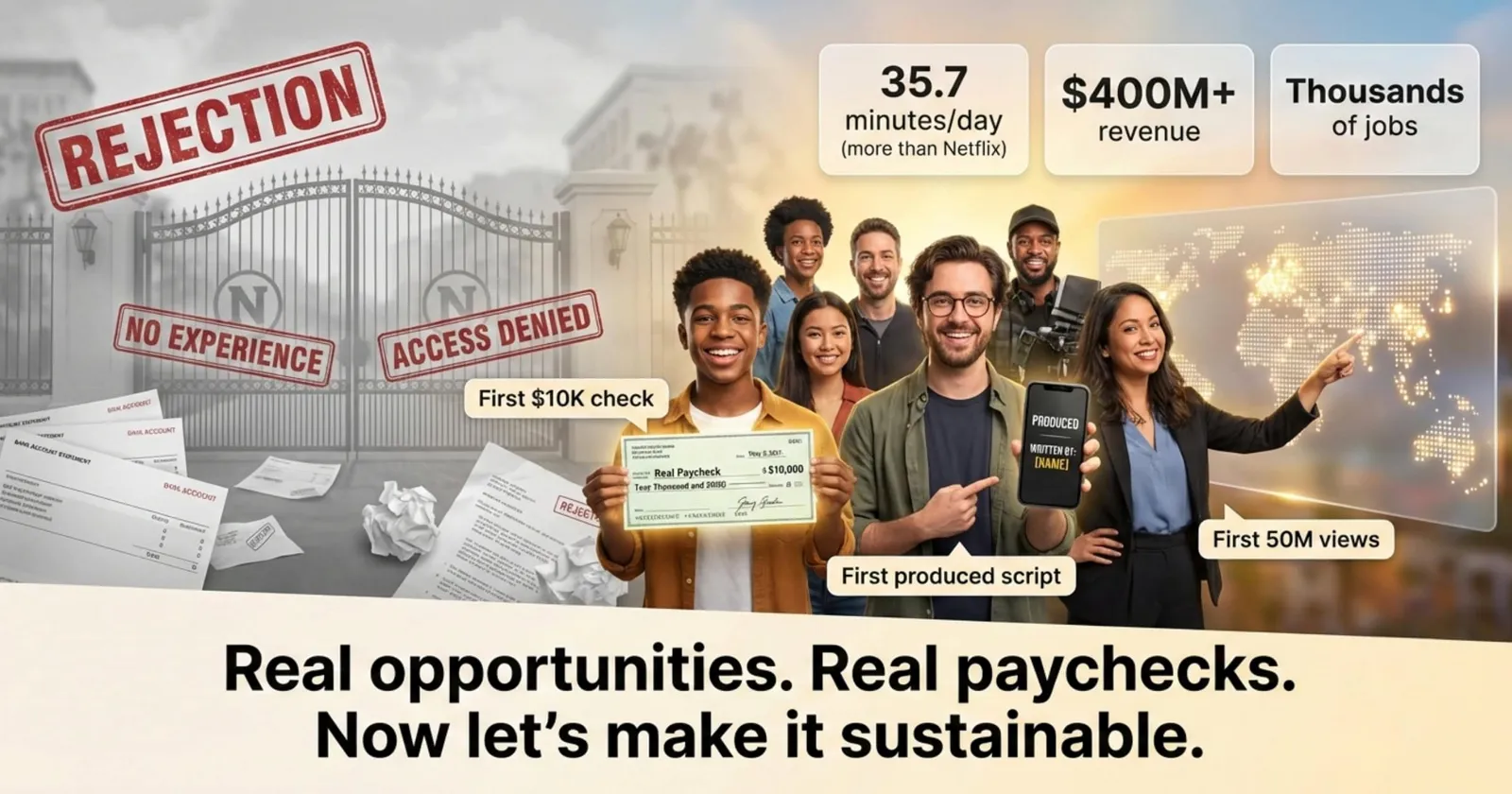
We want to be fair. Because despite everything we've laid out, vertical drama is doing something genuinely important.
Molly Anderson, a 24-year-old vertical actor, told Deadline that nothing else in the nonunion or indie sphere pays anywhere near what verticals pay. She's right. For thousands of actors stuck between student films that pay nothing and network TV that won't return their calls, vertical drama is their first real paycheck.
It’s giving writers their first produced credits. Film school grads who couldn't crack a writer's room are getting scripts produced and distributed globally. It’s building an entirely new segment of entertainment that barely existed three years ago. Omdia's analysis shows that U.S. mobile users now spend more time watching microdrama apps than they do watching Netflix, Disney+, or Prime Video on their phones. ReelShort pulls 35.7 minutes of daily use per user compared to Netflix's 24.8 minutes. Fox Entertainment bought an equity stake in Holywater and committed to producing 200 original microdramas. Disney+ just launched its first vertical drama. Maksim Chmerkovskiy from Dancing with the Stars is now the first reality TV star to lead a vertical series. Netflix and Amazon are actively exploring ways into the format. Over $400 million in combined revenue across just two platforms in 2024.
Thousands of jobs. A format that speaks to how people actually consume content.
We're not asking the industry to stop. We're asking it to do better by the people who make it work.
What You Can Do Right Now
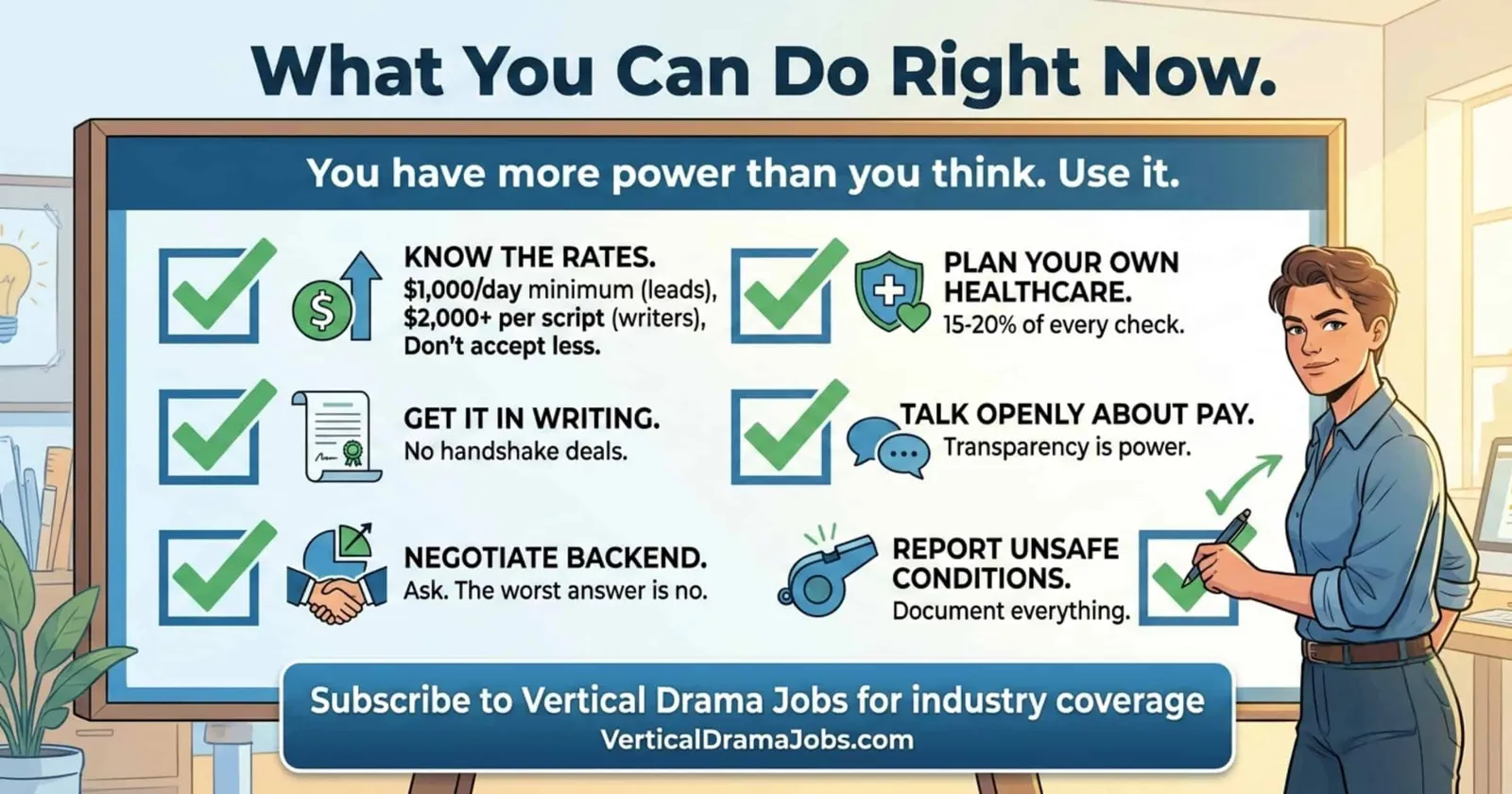
If you're an actor, writer, or crew member in this space:
- Know the rates. Don't accept less than the market. Lead actors: $1,000/day minimum. Writers: $2,000+ per script or $22/hr at the bare floor. If someone offers less, walk.
- Negotiate backend whenever possible. Ask for revenue participation. NextScene offers net points. Push for it elsewhere. The worst answer is no, and asking normalizes the conversation.
- Get everything in writing. Day rate, total compensation, shoot schedule, payment timeline, credit, usage rights. No handshake deals. Ever.
- Plan for your own healthcare. Since no employer is covering you, set aside 15-20% of every check for healthcare and retirement. Look into
- Report unsafe conditions. 16+ hour days with no breaks? Unsafe sets? Document everything. SAG-AFTRA's safety hotline accepts reports from nonunion sets.
- Talk openly about pay. The more performers discuss rates and conditions publicly, the harder it becomes for bad productions to underpay. Salary transparency is power.
- Support structural change. Even if you work nonunion, union agreements raise the floor for everyone. Advocate for revenue sharing, healthcare contributions, and fair pricing.
We built Vertical Drama Jobs to connect professionals with real, paid work in this industry. We only list legitimate, paid opportunities. If a production on our board isn't treating people fairly, we want to know about it.
This industry is worth fighting for. But we have to fight for the people who make it, not just the platforms that profit from it.
The economics are there. The margins in vertical drama are better than traditional Hollywood. The distribution is simpler. The overhead is lower. Ben Affleck explained why traditional movies need $800 million to profit. Vertical drama doesn't have that problem. So the question isn't whether the economics can support revenue sharing and healthcare contributions it's whether the industry builds those structures now, while the foundation is still being laid, or waits until a crisis forces the conversation.
Find legitimate, paid work in vertical drama and Subscribe to the Vertical Drama Jobs Newsletter on our site for honest industry coverage