What Is a Vertical Drama? The Complete Guide to the $8 Billion Format Taking Over Your Phone
If you've been scrolling Instagram or TikTok lately and stumbled across clips of a billionaire CEO dramatically revealing his secret identity to his fake wife, or a werewolf alpha defending his mate from scheming relatives, congratulations. You've encountered the vertical drama or micro drama phenomenon.
These aren't random TikTok skits. They're professionally produced serialized shows shot specifically for your phone's vertical orientation, and they're generating $8.4 billion in revenue globally. By 2030, industry projections hit $26 billion. Apps like ReelShort and DramaBox now rival Hulu and Paramount+ in engagement metrics, with over 370 million downloads in the U.S. alone.
So what exactly are these things, where did they come from, and why are millions of people spending $15 to $50 finishing a single series one 60-second episode at a time?
Let me explain everything.
The Technical Definition (What Makes Something a "Vertical Drama or Micro Drama")
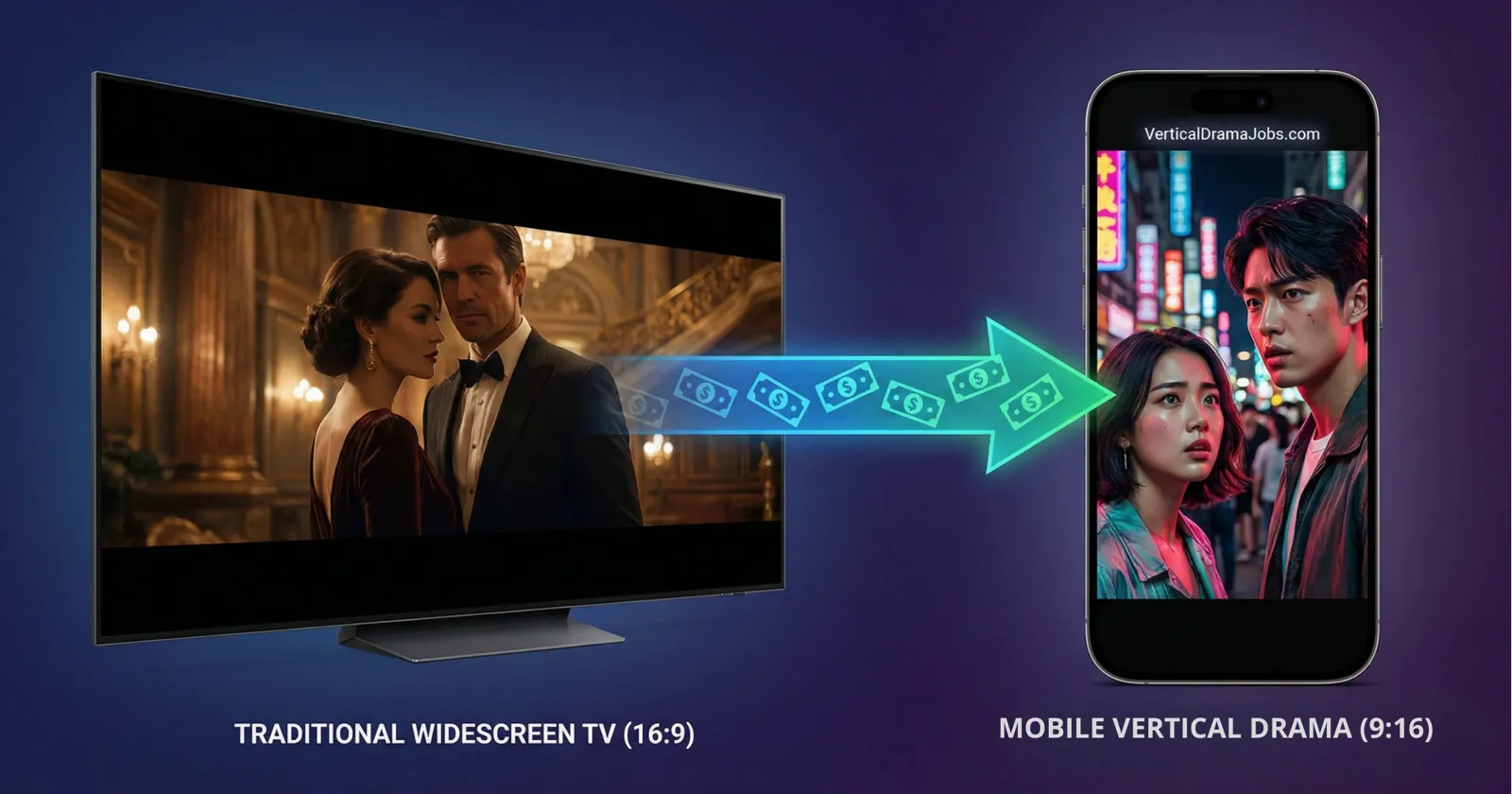
A vertical drama or micro drama (both terms are used interchangeably in the industry with micro drama being more commonly used in the media, while professionals use vertical drama, and the audience use both) is a professionally produced, serialized narrative designed exclusively for smartphone viewing in portrait orientation. Here are the defining specs:
Aspect Ratio: 9:16 (the exact inverse of traditional widescreen). Cameras are literally mounted sideways or on 90-degree brackets to capture footage optimized for phones held vertically.
Episode Length: 60 to 120 seconds per episode. That's it. No longer. The sweet spot is around 90 seconds.
Series Length: Complete series run 60 to 100 episodes, adding up to roughly the runtime of a feature film (90-120 minutes total).
Production Quality: Professionally scripted, acted, shot, and edited. This isn't user-generated content. These are productions with crews, lighting, multiple cameras, and post-production workflows.
The terminology varies by market. "Vertical drama" emphasizes the orientation. "Microdrama" highlights the brevity. "Duanju" (短剧) is the original Chinese term meaning "short drama." They all refer to the same format.
What separates vertical dramas from other short-form content:
NOT TikTok or YouTube Shorts: Those platforms host user-generated clips without narrative continuity. Vertical dramas are scripted productions with ongoing storylines and character arcs (compressed as they may be).
NOT traditional web series: Web series typically run 10 to 30 minutes per episode in horizontal format. They're "TV for the internet." Vertical dramas are built from the ground up for mobile phones.
NOT Quibi: Jeffrey Katzenberg's $1.75 billion platform tried to force prestige TV aesthetics onto mobile viewing with horizontal orientation and subscription pricing. Vertical dramas learned exactly the opposite lessons and succeeded.
The genius lies in what one analyst called "lowering the commitment barrier to almost zero." Traditional streaming asks for 45-minute investments. Microdramas demand just 60 seconds. That's a commitment so trivial that viewers rarely resist clicking "next episode."
And that's where things get interesting.
The Chinese Origins: From Web Novels to Werewolf Billionaires
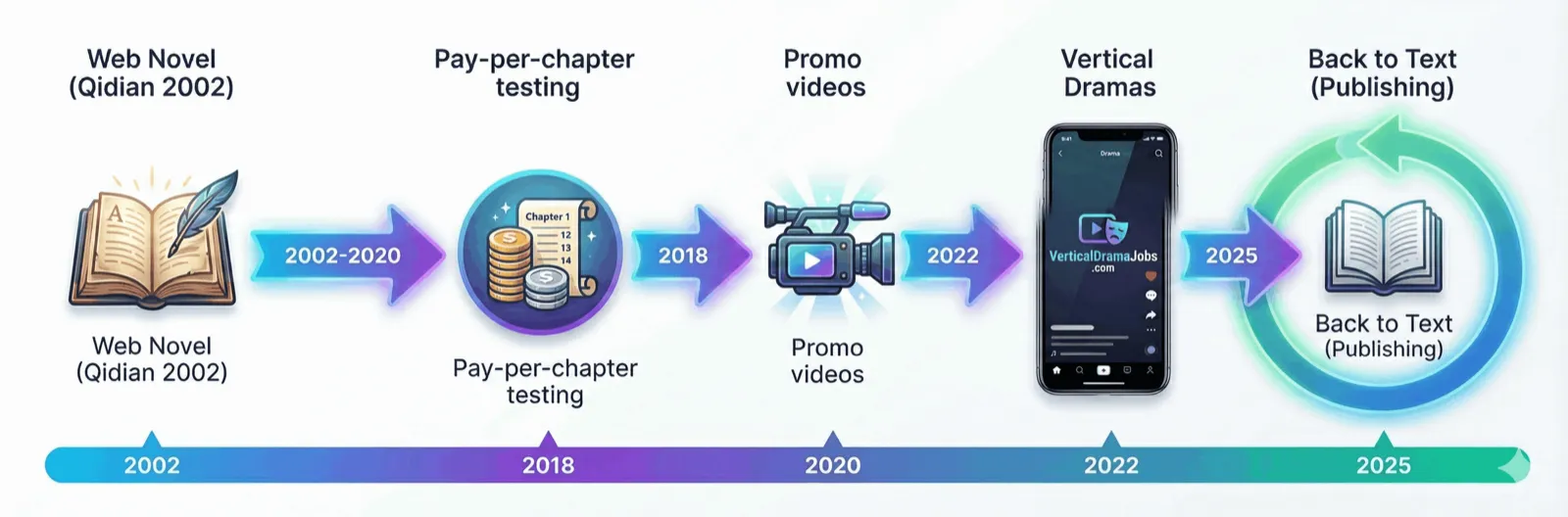
The story begins in 2002, not with video at all, but with Chinese web fiction.
Platforms like Qidian and Jinjiang Literature City pioneered serialized digital storytelling with pay-per-chapter monetization. Authors published stories chapter by chapter, receiving immediate reader feedback and adapting narratives in real time based on engagement. Popular tropes got replicated. Unsuccessful experiments disappeared. For two decades, this content laboratory established the exact patterns that now dominate microdramas: scheming mothers-in-law, secret billionaire reveals, contract marriages, rebirth narratives.
Video-form duanju first appeared on Youku Tudou in 2013, but the modern format crystallized around 2018 when vertical microdramas designed specifically for mobile viewing entered public consciousness in China.
Then COVID-19 hit.
With theaters closed and audiences homebound, demand for mobile entertainment surged. By 2021, China's microdrama market had reached $500 million. The professionalization happened rapidly. Fast shoots under two weeks, standardized vertical format, and sophisticated freemium monetization became industry norms.
ReelShort launched in August 2022 as the first major microdrama app targeting international audiences. It was created by Crazy Maple Studios, a Silicon Valley subsidiary of Beijing-based COL Group (which counts Tencent among its investors).
The timing proved perfect.
By November 2023, ReelShort downloads from the U.S. Apple App Store had surged so dramatically that COL Group's stock price doubled in two weeks. French media dubbed it "the TikTok of series."
Today's platform ecosystem includes:
ReelShort: Market leader with roughly $400 million in 2024 revenue and 50 million monthly active users
DramaBox: The only profitable major platform ($10 million net profit on $323 million revenue), selected for Disney's 2025 Accelerator program
ShortMax: Korean-owned, specializing in werewolf romance and supernatural content
FlexTV: Singapore-based platform with questionable credibility (parent company has a history of failed business pivots)
My Drama (Holywater): Ukrainian company that won a 2025 Webby Award and secured Fox Entertainment investment for 200+ vertical series
China's domestic platforms: Douyin's "Red Fruit," Kuaishou's "Xi Fan," and Tencent's WeChat Video integration collectively serve 830 million viewers who made microdramas surpass domestic box office revenue in 2024.
The format that started as "fast promo videos for web novels" had become a multi-billion dollar global industry.
Inside the Production Machine: How They Actually Make These Things
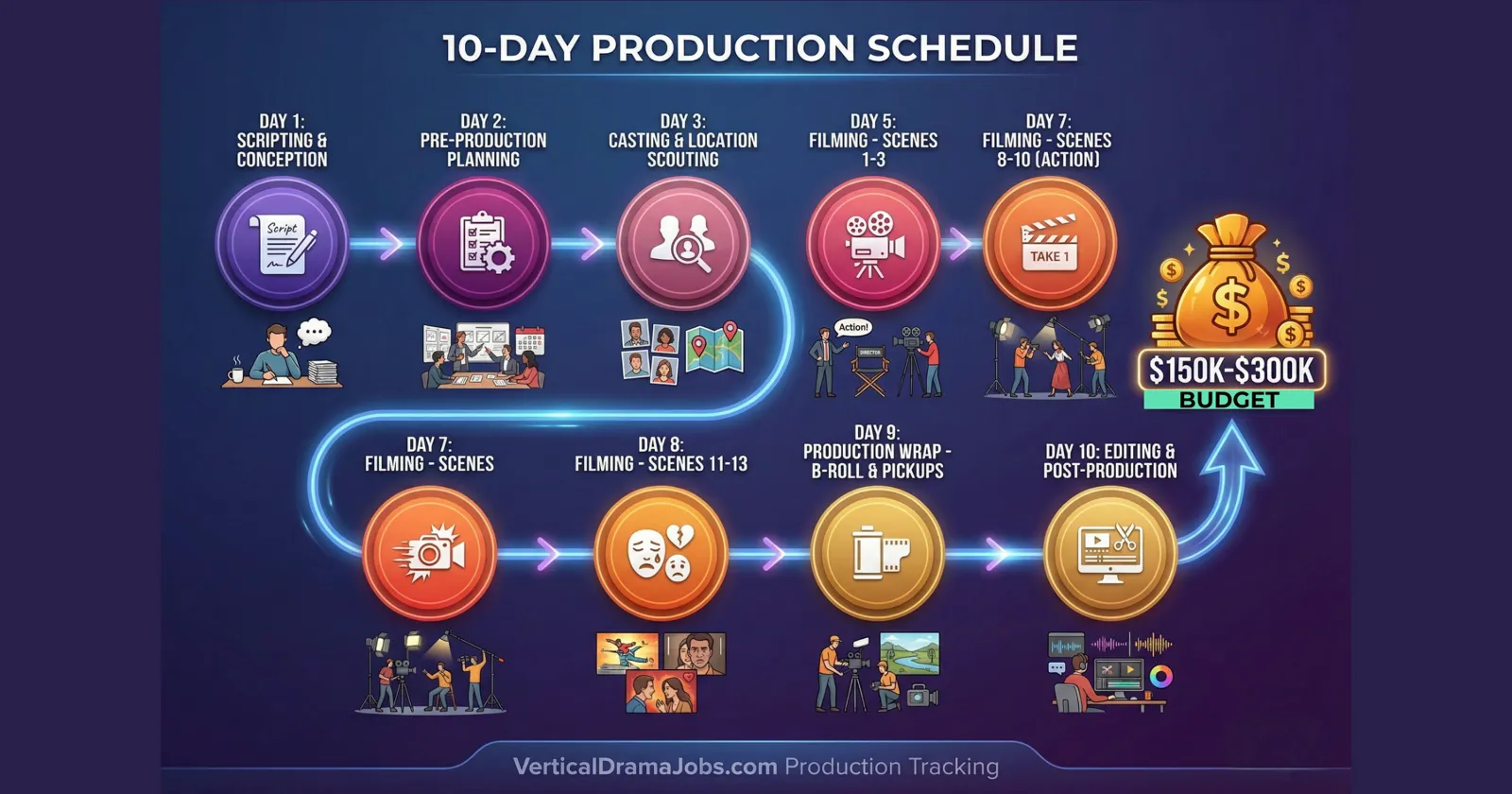
Here's where it gets wild. A complete 80-episode vertical drama costs $150,000 to $300,000 to produce in the U.S. That's roughly 1% to 2% of a Netflix drama budget.
Chinese productions run even leaner at $50,000 to $75,000. Premium "S-class" productions occasionally reach $600,000, but the format's entire appeal rests on speed and efficiency over polish.
The Typical Production Schedule:
Day 1-10: Shoot the entire series. That's it. Ten days max.
Crews shoot 15 to 20 pages per day, compared to 4 to 5 pages for traditional productions. The workdays run 12 hours with minimal breaks. There's no time for rehearsal or retakes. Actors must arrive prepared to "learn lines, hit marks" immediately.
Equipment Setup:
Two-camera rigs with cameras rotated 90 degrees to capture vertical framing. Simplified LED lighting packages. Lavalier microphones (boom placement is difficult in the narrow vertical frame). Parallel editing workflows where footage transfers to editors immediately after shooting.
Sample Budget Breakdown ($220,000 production):
Note these figures are based on anecdotal estimates from the industry participants and are not standard. They will vary based on several factors
- Lead actors collectively: $42,000 (approx $500/day × 12 days for six leads)
- Head writer: $8,000 for script plus revisions
- Director: $12,000 for 12 days
- Two editors: $9,000 each for three weeks of work
- Crew, locations, equipment, post-production: remaining budget
Most productions remain non-union, though SAG-AFTRA has announced a new "Verticals Agreement" to provide union protections for projects under $300,000.
The Writing Process:
Each micro-episode must contain a beginning, middle, end, and cliffhanger within 1 to 3 script pages. Dialogue is "extremely lean" with every word propelling the narrative forward.
Most IP originates from Chinese web novels already tested on platforms like Qidian. Successful stories are licensed, adapted, and sometimes algorithmically modified based on viewer feedback. ReelShort CEO Joey Jia openly acknowledges that plots are "generated algorithmically, based on what has previously performed well."
Approximately 40,000 short dramas are produced annually in China, creating vast content libraries for translation and adaptation.
The production model is a content factory optimized for volume over artistry. And it works.
The Content Formula: Why Everything Involves Billionaires and Werewolves

Let's talk about the titles:
"Snatched a Billionaire To Be My Husband" "Fated to My Forbidden Alpha" "Never Divorce a Secret Billionaire Heiress" "Pregnant by the Golden Billionaire Bachelor"
These aren't parodies. They're actual hit series with millions of views.
The specificity serves multiple purposes: keyword optimization for discoverability, instant genre signaling for audiences, and global comprehension across language barriers. As CEO Joey Jia explains, "If our title is too literary, nobody will understand."
The Dominant Genres:
Billionaire/CEO Romance: Secret wealth reveals, contract marriages, scheming business rivals, powerful men who fall for "ordinary" women (who inevitably turn out to be secretly extraordinary)
Werewolf/Supernatural Romance: Alpha males, pack dynamics, fated mates, supernatural hierarchies, forbidden romances across power structures
Revenge Dramas: Protagonists methodically destroying everyone who wronged them, often after being reborn or gaining second chances
Rebirth Narratives: Characters dying and returning to fix past mistakes, armed with future knowledge
These aren't random. They're inherited directly from Chinese web novel traditions and mirror patterns in Western romance publishing (Mills & Boon, Barbara Cartland) that have proven profitable for decades.
The Cliffhanger Mechanics:
Industry standard demands a hook every 30 to 60 seconds and a cliffhanger ending every single episode. No exceptions.
Writers employ the "scene-splitting method," taking what would be one scene in traditional television and distributing it across multiple episodes at maximum tension points.
Common cliffhanger types:
- Revelation moments ("She's not who you think she is!")
- Physical danger
- Interrupted romantic tension
- Betrayal discoveries
- Reversals of fortune
The paywall is strategically placed immediately after the most intense cliffhanger, typically around Episode 10, converting emotional investment into payment.
The Acting Style:
Deliberately heightened, described by producers as "soap opera on cocaine." Performers commit fully to melodramatic delivery. One actress described the dialogue as "the types of dialogue that Barbie dolls would have when you're playing with kids."
Male leads "stand, brood, sweep you off feet" while female leads carry the emotional weight. The camp is intentional. Viewers know the aesthetic codes, and earnest commitment to absurd premises is "part of the fun."
Production values vary from "decent to sub-pornographic" (per industry reviewers), though the format's narrow vertical frame actually reduces the visible set dressing required. You can shoot in a single room and make it look like a mansion if you frame it right.
The Money Trap: How Freemium Hooks Turn Into $50 Spending Sprees
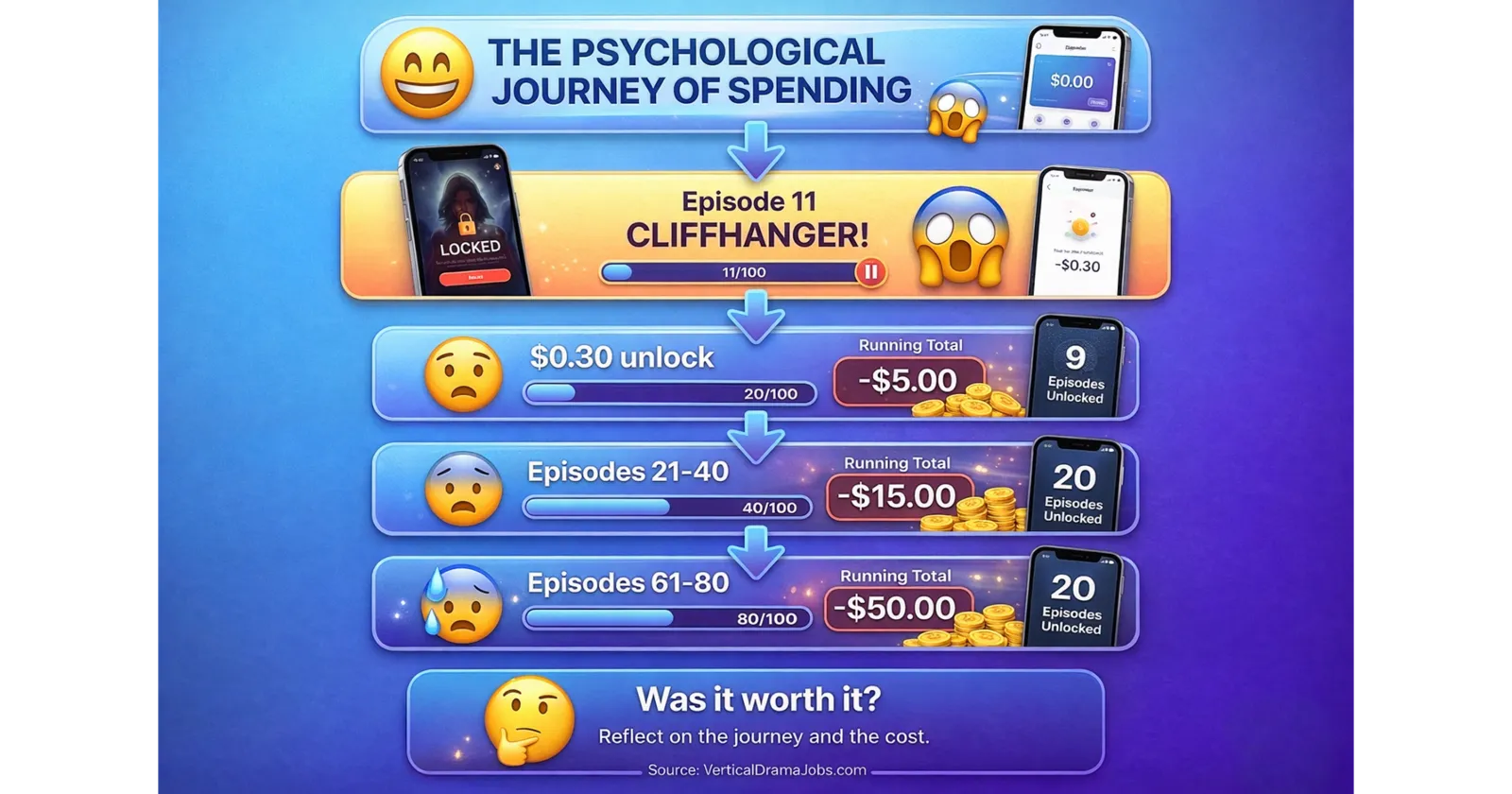
Here's where mobile gaming psychology kicks in.
The first 5 to 10 episodes are free, hooking viewers into the cliffhanger loop. Subsequent episodes require virtual currency. ReelShort uses "coins" an analog for “tokens” used in video gaming, which is purchasable in bundles, with each episode costing roughly $0.10 to $0.30.
By the time viewers finish an 80-episode series, they've often spent $15 to $50 without fully realizing it.
The coin system creates psychological distance from real spending, exactly as it does in video games. You're not spending money. You're spending coins. And you just need 100 more coins to see what happens after that cliffhanger.
The Financial Reality:
DramaBox's 2024 numbers: $323 million revenue with $10 million net profit. This proves sustainable unit economics are achievable.
ReelShort's 2024 numbers: Approximately $400 million revenue but still loss-making due to aggressive customer acquisition spending.
Top three microdrama apps combined: Over $3 million daily in consumer spending.
Revenue per download: $2 for ReelShort (versus $0.73 for the failed Quibi)
The coin system incorporates gaming mechanics:
- "Lucky wheel" gacha spins that boosted first-week revenue per user by 13%
- Daily login bonuses
- Limited-time offers triggering FOMO
- Rewarded video ads (watch ads to unlock episodes)
Subscription options exist ($17.99 to $19.99 weekly on DramaBox), but these are significantly more expensive than traditional streaming. Netflix maxes out at $22.99 monthly. DramaBox charges nearly that much per week.
The Customer Acquisition Problem:
Here's the dirty secret: The biggest expense isn't production. It's marketing.
A major traffic marketing agency, spends over $50 million monthly across Meta, Instagram, and TikTok advertising microdramas. Return on investment varies between 0.7x and 1.6x depending on titles.
This explains why ReelShort remains unprofitable despite massive revenue. They've burned hundreds of millions in marketing spend. The format depends on social media advertising funnels that are expensive to scale.
Three-minute promotional clips outperform shorter formats for ROI, turning TikTok and Instagram Reels into discovery mechanisms that funnel viewers to paid apps.
It's a treadmill. You have to keep running faster just to stay in place.
Who's Actually Watching: The Surprising Audience Behind Billions
The audience defies simple stereotypes.
Core Demographic: A 2025 fan survey by Vertical Drama Love shows that 94% of the audience is primarily female. But within the demographic, the psychographic is wide ranging.
But the data reveals unexpected segments:
In APAC markets, the 55+ age group shows the highest uptake (Fabric Data research). 35% of Gen Z (ages 13-24) watch microdramas. In the U.S., Hispanic viewers lead adoption at 41% already watching.
ReelShort's audience breakdown: 50 million monthly active users, 70% female, 50% U.S.-based
Viewing Contexts:
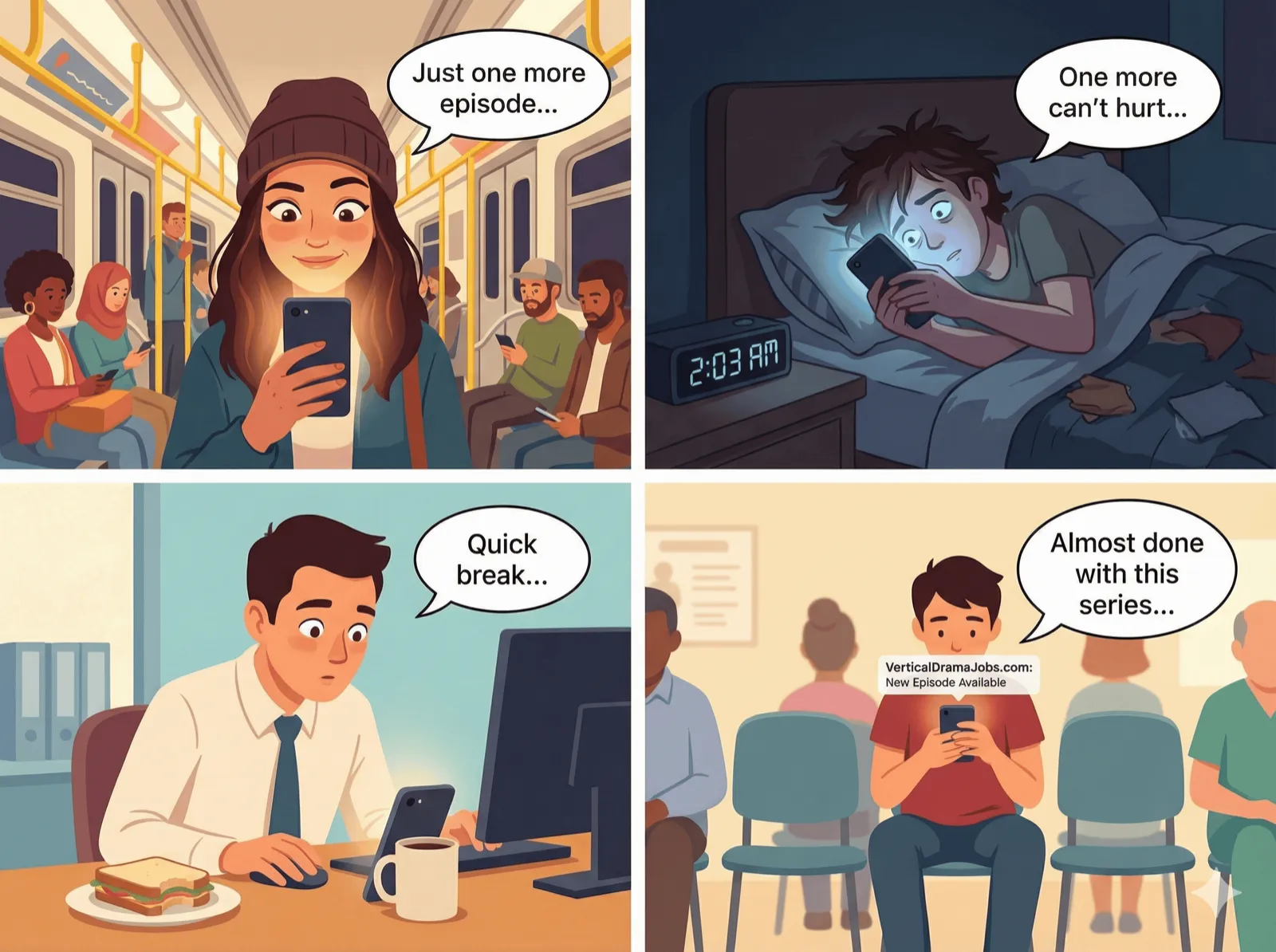
Commutes. Lunch breaks. 2AM Bedtime scrolling. Waiting rooms. Moments previously dedicated to doomscrolling social media.
The format exploits fragmented attention rather than fighting it. Average attention spans have collapsed from 2.5 minutes in 2004 to 47 seconds currently (per UC Irvine research), and microdramas are engineered for this reality.
One industry persona description captures it perfectly: "Short drama apps are a lifesaver during her 40-minute daily commute. She watches three quick dramas before arriving at work, often choosing emotional or romantic plots to lift her mood."
The Psychology:
Researchers identify "constant dopamine boosts through rapid plot twists," emotional beats every 15 to 20 seconds, and a "psychological loop of instant gratification."
The format triggers four mechanisms:
- Thrilling sensation (emotional catharsis)
- Sense of possession (ownership over protagonist's achievements)
- Immersive experience (despite the brevity)
- Dopamine anticipation at each cliffhanger
Hub Entertainment Research found 47% of viewers cite "minimal time commitment" as the draw, followed by curiosity (41%) and dramatic storytelling appeal (37%).
The Guilty Pleasure Framing:
Industry insiders are candid about the positioning. Joey Jia: "We offer fast food. We admit it... compared with people who go to McDonald's versus people who go to a fancy French restaurant."
A 35-year-old Chinese viewer told NPR: "It's especially perfect for dreamers, like us. The male characters always have billions in assets, or the female lead makes an incredible comeback."
One reviewer called the content "a decadent dessert: indulgent, dramatic, and probably not the healthiest choice, but who cares?"
The guilty pleasure framing is the point. These aren't marketed as prestige content. They're marketed as addictive escapism that fits between everything else in your life.
Why Quibi Failed But Vertical Dramas Print Money
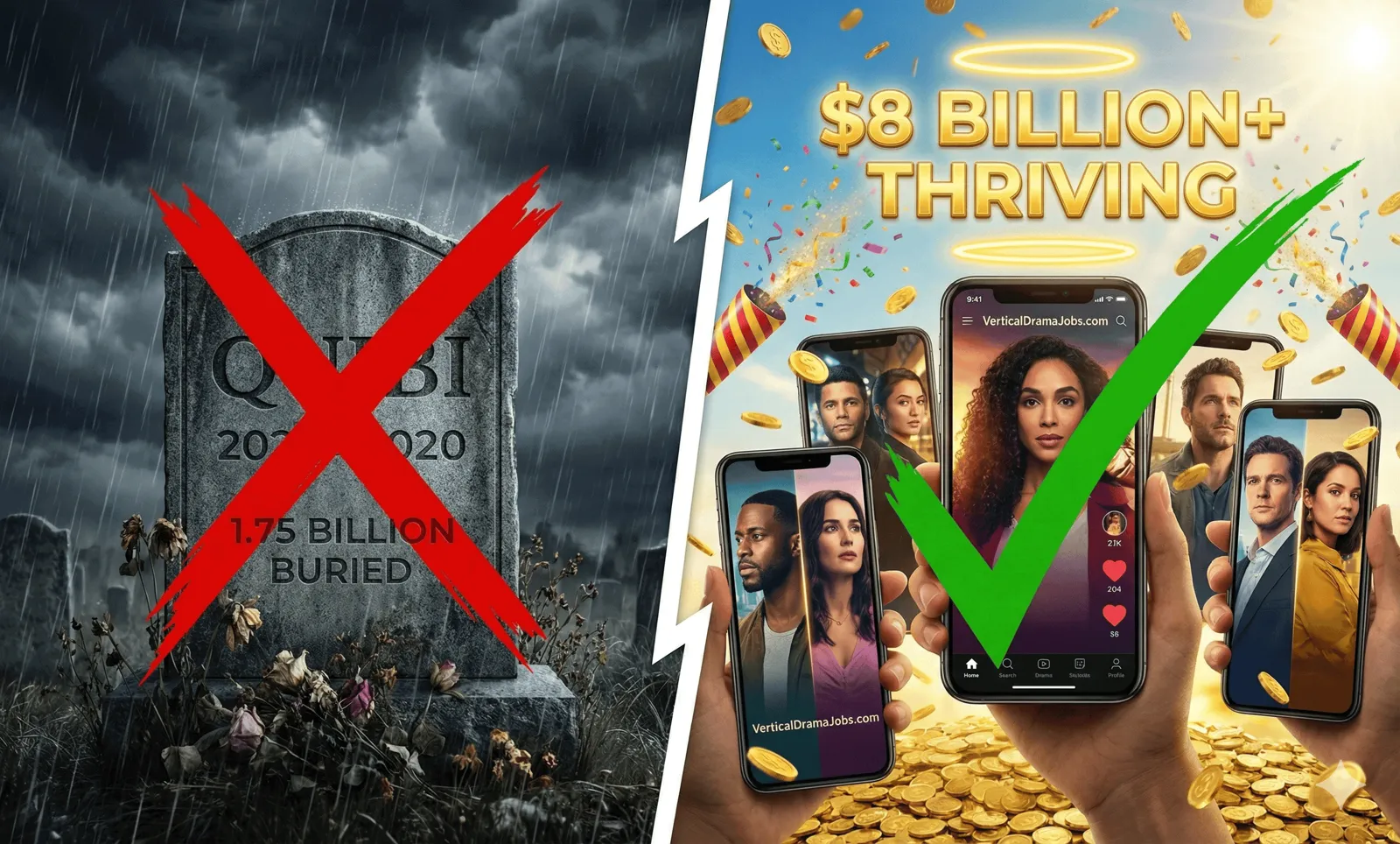
The comparison to Quibi illuminates everything about why this format works.
Jeffrey Katzenberg's mobile streaming venture launched in April 2020 with $1.75 billion in funding, A-list talent (Spielberg, Guillermo del Toro), and horizontal prestige TV aesthetics designed for quality.
It died within six months, attracting fewer than 1 million subscribers versus a 7 million target.
ReelShort launched two years later with a fraction of the resources and now generates millions annually.
Why Quibi Failed:
Pricing: Traditional subscription model ($4.99 to $7.99/month) fighting the expectation that mobile video should be free
Production Values: Prestige aesthetics that felt mismatched with casual mobile viewing
Talent Costs: Expensive A-list talent with compressed shooting schedules that still ran into millions per project
Timing: Launched during pandemic lockdowns when its "on-the-go content" positioning made no sense
No Social Features: Couldn't screenshot or share, preventing viral spread
Why Vertical Dramas Succeed:
Pricing: Freemium with per-episode micropayments. No upfront commitment required.
Production Values: B-movie camp that viewers perceive as appropriately suited to the context
Talent Costs: Upcoming actors, $500-$1,000/day rates, 10-day or slightly longer productions
Timing: Arrived when mobile-first viewing had become permanent behavior
Social Discovery: Clips go viral on TikTok and Instagram, driving app downloads
The contrast with traditional streaming is equally instructive. Netflix invests millions per episode for content consumed horizontally at home. Microdramas invest $150,000 to $300,000 for an entire series consumed vertically between activities.
Netflix relies on monthly subscriptions requiring ongoing payment regardless of consumption. Microdramas extract payment at moments of maximum emotional investment, the cliffhanger paywall.
As one analyst framed it: "Microdramas aren't replacing TV or film. They're annexing the minutes between everything else and charging rent on emotion."
The Cultural Pipeline: Qidian to Your Phone Screen
Understanding vertical dramas requires recognizing the Chinese web novel infrastructure that feeds them.
Platforms like Qidian (established 2002) and China Literature (Tencent subsidiary with 229 million monthly active users and 5.6 million works) pioneered the fundamental model: serialized stories published chapter by chapter with pay-per-chapter unlocks.
Authors receive immediate reader feedback, adapting stories in real time based on engagement. Popular tropes get replicated. Unsuccessful experiments disappear.
This two-decade content laboratory established the exact patterns that now dominate microdramas: scheming mothers-in-law, secret billionaire reveals, rebirth narratives, contract marriages.
The Adaptation Pipeline:
COL Group (ReelShort's parent company) operates 17K.com and 4YT.NET web fiction platforms. China Literature converts blockbuster web novels into vertical productions. 60% of new scripted series stem from online literature.
The format started as promotional videos for popular web fiction before evolving into standalone productions. In a full-circle moment, ReelShort recently launched a Publishing House to novelize popular vertical drama titles back into text.
Why This Matters:
The tropes aren't random. They're the surviving products of massive selection pressure across millions of serialized stories consumed by hundreds of millions of Chinese readers.
The wish-fulfillment patterns (underdog triumphs, hidden identities revealed, revenge completed) emerged because they consistently drove engagement and payment. The cliffhanger-per-chapter structure that now defines micro-episodes was tested in text form for years before being translated to video.
The Global Export:
What began as purely Chinese content now gets translated, adapted, and localized for global audiences. My Drama (Holywater) uses AI-powered localization to adapt content across languages. Western productions increasingly mirror Chinese originals.
The influence flows both directions. American romance novel conventions inform Chinese web fiction, which gets adapted to Chinese vertical dramas, which get re-localized for American audiences.
The result is a surprisingly effective cross-cultural content machine that's impossible to stop because it's feeding on two decades of proven narrative patterns.
Hollywood's Response: From Skepticism to Full Participation
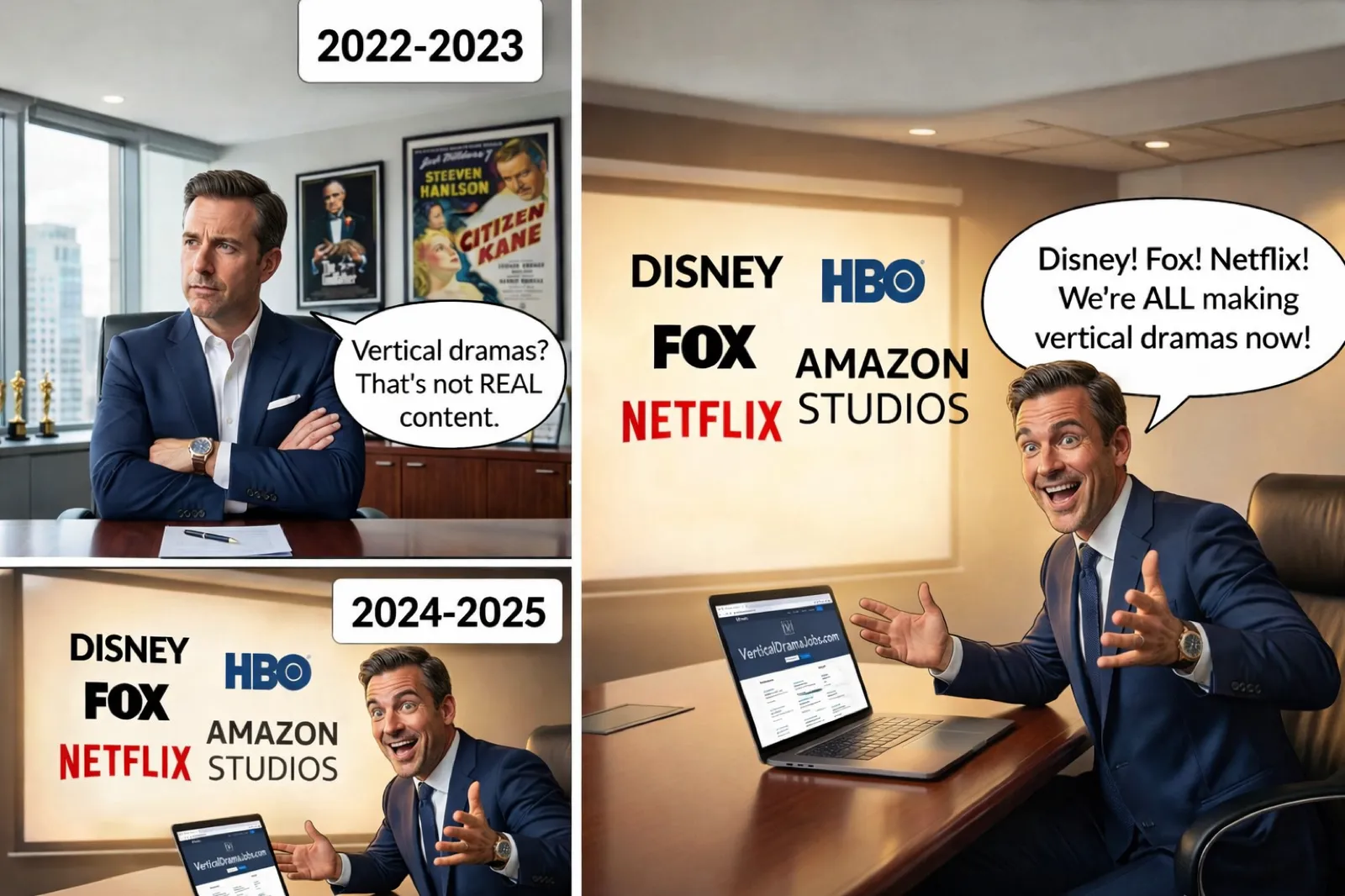
The entertainment establishment spent 2022 and 2023 dismissing vertical dramas as a fad. By 2024, they were scrambling to participate.
Disney selected DramaBox for its 2025 Accelerator program, one of only four companies chosen.
Fox Entertainment invested in Holywater with commitment to produce 200+ vertical series over the next two years.
Netflix adopted a vertical mobile feed and is testing microdrama pilot programs internally.
MicroCo, a new venture from former Disney, Showtime, and NBCUniversal executives (Lloyd Braun, Jana Winograde, Susan Rovner), is launching an app in 2026.
GammaTime raised $14 million from Kim Kardashian, Kris Jenner, and Alexis Ohanian.
Telemundo Studios is producing its own Spanish-language adaptations.
Even movie industries around the world like Bollywood in India and Nollywood in Nigeria are getting in on the act. We’ve heard rumblings from insiders who have said the launch of platforms like Vertical Bollywood and Vertical Nollywood is in the works from indigenous studios like Wahala Studios and others.
The SAG-AFTRA Response:
The union is developing a specific "Verticals Agreement" covering productions under $300,000. The proposed terms: $250/day for leads, $164/day for others, plus pension and health contributions.
Industry reception has been "cool." Most platforms find the terms economically impossible within their budgets, so productions remain largely non-union.
The WGA confirmed that writing for verticals is covered under its Minimum Basic Agreement, though many current writers work outside union structures.
As the format professionalizes, labor protections are slowly following.
The Risks:
Piracy: Content gets freely reposted across TikTok and YouTube, undermining the paid app model. There's no effective enforcement mechanism.
Customer Acquisition Costs: May prove unsustainable at current levels. Platforms are burning capital faster than they're generating profit (except DramaBox).
Content Quality Concerns: Chinese regulators are condemning "low-brow" productions. Critics question homogenization.
Pricing Ceilings: Subscription pricing ($17.99 weekly) may hit limits as users comparison-shop against traditional streaming.
Regulatory Scrutiny: The gambling-adjacent monetization mechanics (variable reward schedules, loss aversion triggers, virtual currency obscuring real spending) could face regulatory action as they have in gaming.
But for now, the money keeps flowing.
What Makes a Vertical Drama Different: The Complete Comparison
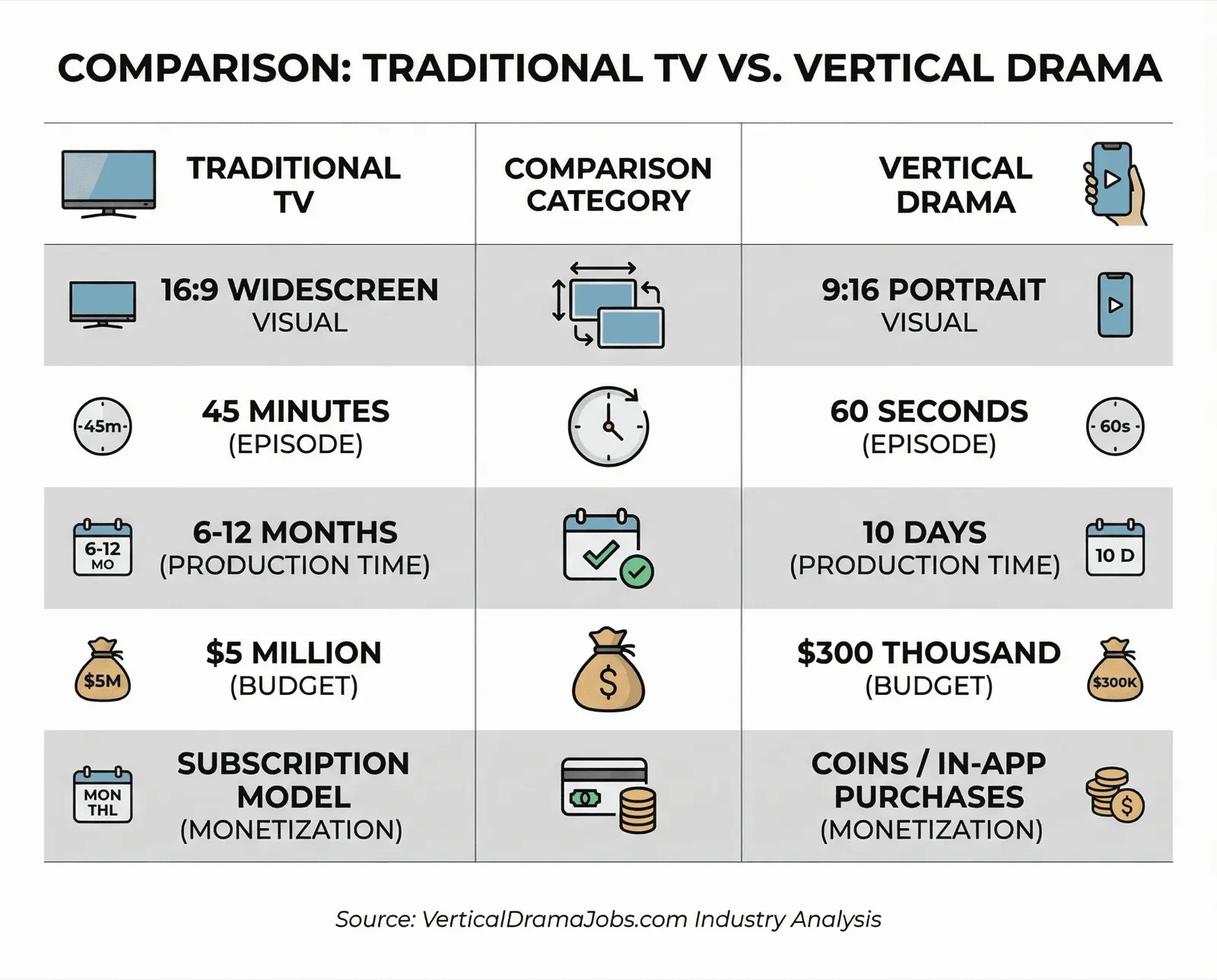
Let me break down exactly how vertical dramas compare to every other format:
vs. TikTok/YouTube Shorts:
- Vertical Dramas: Professional productions, serialized narratives, monetized through apps
- TikTok/Shorts: User-generated, isolated clips, ad-supported or creator funds
vs. Traditional Web Series:
- Vertical Dramas: 60-120 seconds per episode, vertical orientation, mobile-only
- Web Series: 10-30 minutes per episode, horizontal orientation, works on all screens
vs. Soap Operas:
- Vertical Dramas: Compressed pacing, 10-day shoots, algorithmic content selection
- Soap Operas: Traditional longer pacing, ongoing production, writer-driven narratives
vs. Mobile Games:
- Vertical Dramas: Narrative content, similar monetization (coins, gacha, FOMO)
- Mobile Games: Interactive gameplay, identical monetization psychology
vs. Chinese Web Novels:
- Vertical Dramas: Video format, 60-second chapters
- Web Novels: Text format, pay-per-chapter
The format is genuinely hybrid, borrowing mechanics from all these sources but creating something distinct.
The Future: Where Does This Go From Here?
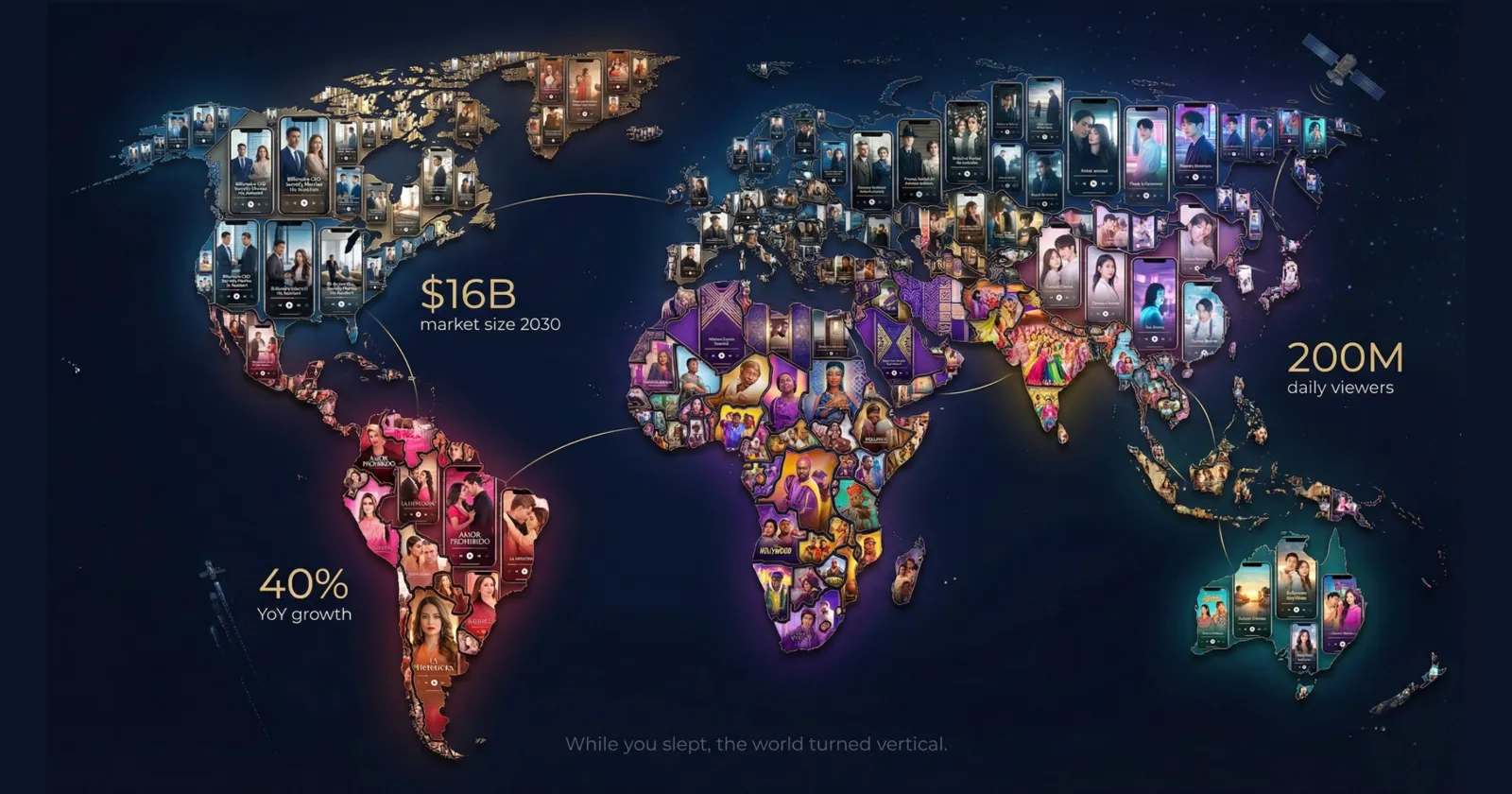
Industry projections show vertical dramas reaching $26 billion globally by 2030. China's domestic market alone hit $9.4 billion in 2025, surpassing theatrical box office.
Three Scenarios:
Scenario 1: Consolidation and Professionalization
Most platforms die. Only 10% of the current 200+ platforms survive. The survivors (DramaBox, ReelShort, maybe 3-4 others) achieve sustainable profitability through superior unit economics. Hollywood studios acquire or partner with remaining platforms. Union protections become standard. Content quality improves incrementally.
This is the most likely scenario.
Scenario 2: Regulatory Crackdown
Governments classify the monetization model as predatory gambling-adjacent behavior and impose restrictions. China tightens content regulations further, killing domestic production volume. Customer acquisition costs collapse platform economics. The bubble pops.
This is possible but less likely than consolidation.
Scenario 3: Format Evolution
AI-generated content drives production costs to near-zero, enabling experimentation. Interactive elements emerge (choose-your-own-adventure microdramas). Integration with social platforms creates new hybrid formats. The format mutates into something we don't recognize yet.
This is the wild card.
What's Certain:
The format has proven it can generate billions without A-list talent, prestige production values, or traditional distribution. The psychological hooks work. The monetization converts. The audience is real and growing.
Whether this represents cultural decline, creative democratization, or simply efficient entertainment remains debated. But the vertical drama revolution isn't coming. It's already here.
And it's running one 60-second cliffhanger at a time.
Final Thoughts: Should You Care About This Format?
If you're an actor, writer, or crew member, yes. This is a $26 billion industry by 2030 creating thousands of jobs annually. The pay isn't great ($250 to $1,200/day for actors, ~$80,000/year for writers), but the volume is massive and the barrier to entry is lower than traditional film/TV.
If you're a writer or content creator, yes. Understanding the mechanics (hooks every 30 seconds, cliffhanger endings, vertical framing) provides insights applicable to all short-form content.
If you're just a viewer wondering why you spent $50 finishing "Fated to My Forbidden Alpha," you're not alone. The format is engineered to extract that behavior. The psychology works. The only defense is awareness.
Vertical dramas represent something genuinely new: not a replacement for film and television but an additional entertainment layer occupying previously empty attention space. Same audience, different contexts. 90-second microdramas on the subway, two-hour movies at home.
The format colonizes the gaps between prestige content. And whether you love it or hate it, it's making billions doing exactly that. And you can get a slice of those billions by grabbing some of the opportunities on Vertical Drama Jobs.