How to Become a Vertical Actor (2027 Guide)
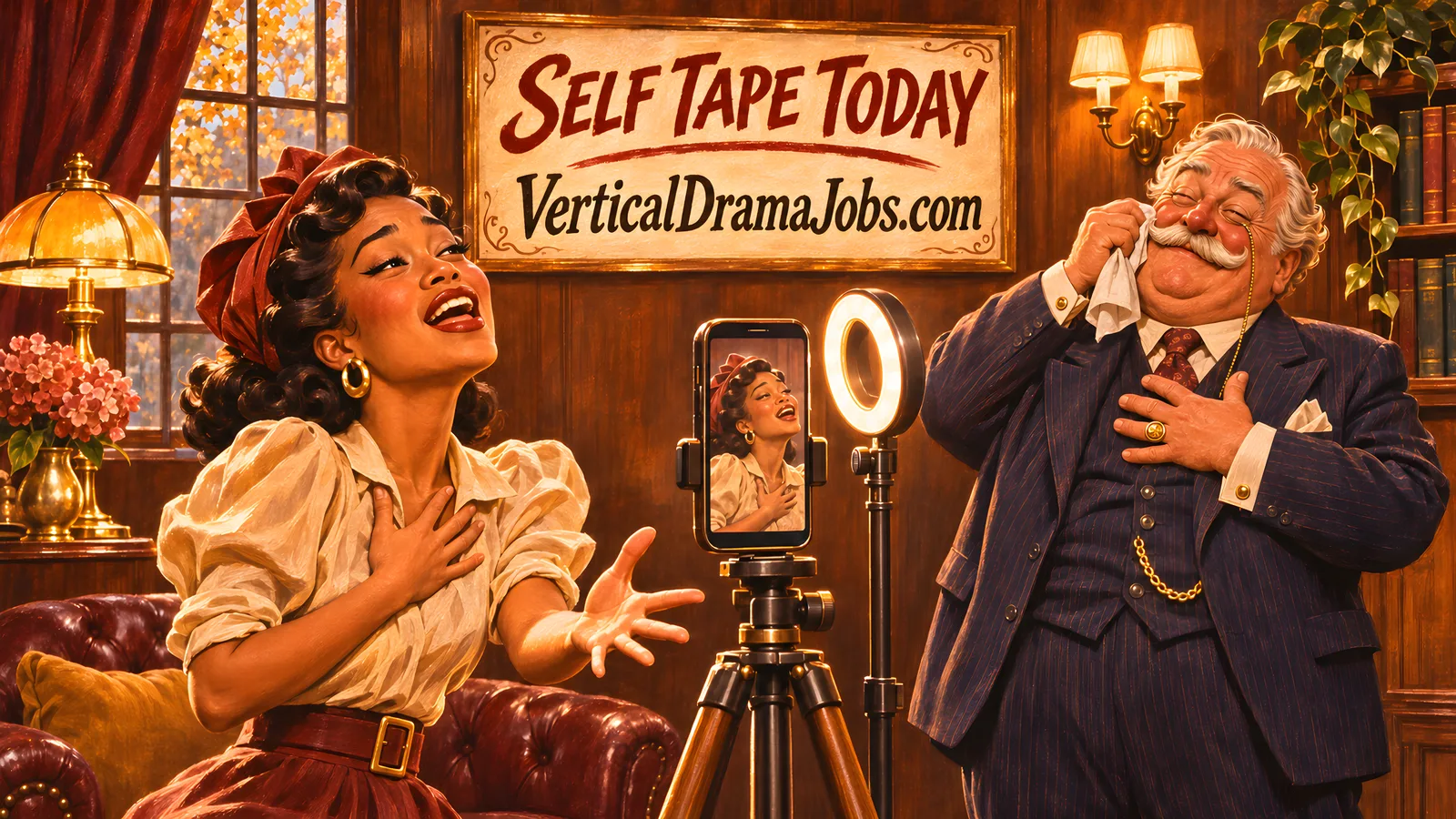
In 2023 an agent dropped Kasey Esser. Then he saw a werewolf micro drama listing, taped for it, heard nothing, and messaged the producer on Instagram. He had the part that night. He's done more than 55 micro dramas since.
To become a vertical actor, find casting calls and send a self-tape for every one you can. UK casting director Liyanne Marie says the first 15 to 30 seconds of the tape matter most, so start strong. No credits yet? Start with background work or day-player parts, the small roles you shoot in a day. You can find calls on our casting calls hub.
The steps below come from Kasey, Liyanne, Cindy Sorley (who casts background actors and day players), and two actors on Breaking The Meta. Liyanne and Cindy both spoke at our Micro Drama Summit.
What does a vertical actor do?
A vertical actor plays a part in a drama made for phones. It's usually shot in 9:16, the tall phone shape, and each episode runs one to three minutes. The Hollywood Reporter described the format in October 2025 as serialized stories divided into increments of one to three minutes.
The set moves fast. In a Short Drama Decode video from March 2026, Liyanne said she'd been casting verticals for nearly two years. She said a shoot is usually done within about 8 days, and actors can get through up to 13 pages of script in a day. At the Summit she put it higher. She said shoots run seven to ten days, and actors are sometimes asked for 22 pages a day, or as many as 30 or 32 at the most. On set you take direction from the director, but the production company or app is behind them giving notes. The description of Cayman Cardiff's episode on The Vertical Buzz even lists client notes on set as its own chapter.
The audience matters too. Kasey said his first show made viewers download an app and pay per episode. Two weeks after it came out, fans in Mexico and Australia were messaging him. When people pay to keep watching, they get attached to a face they like or hate. Our piece on why the fans make actors hard to replace covers that side.
How to become a vertical actor in 2027
There are seven steps, and you don't need an agent, a union card or a drama school degree for any of them. Each one comes from something an actor or casting director said on the record.
1. Get headshots and a clean self-tape setup
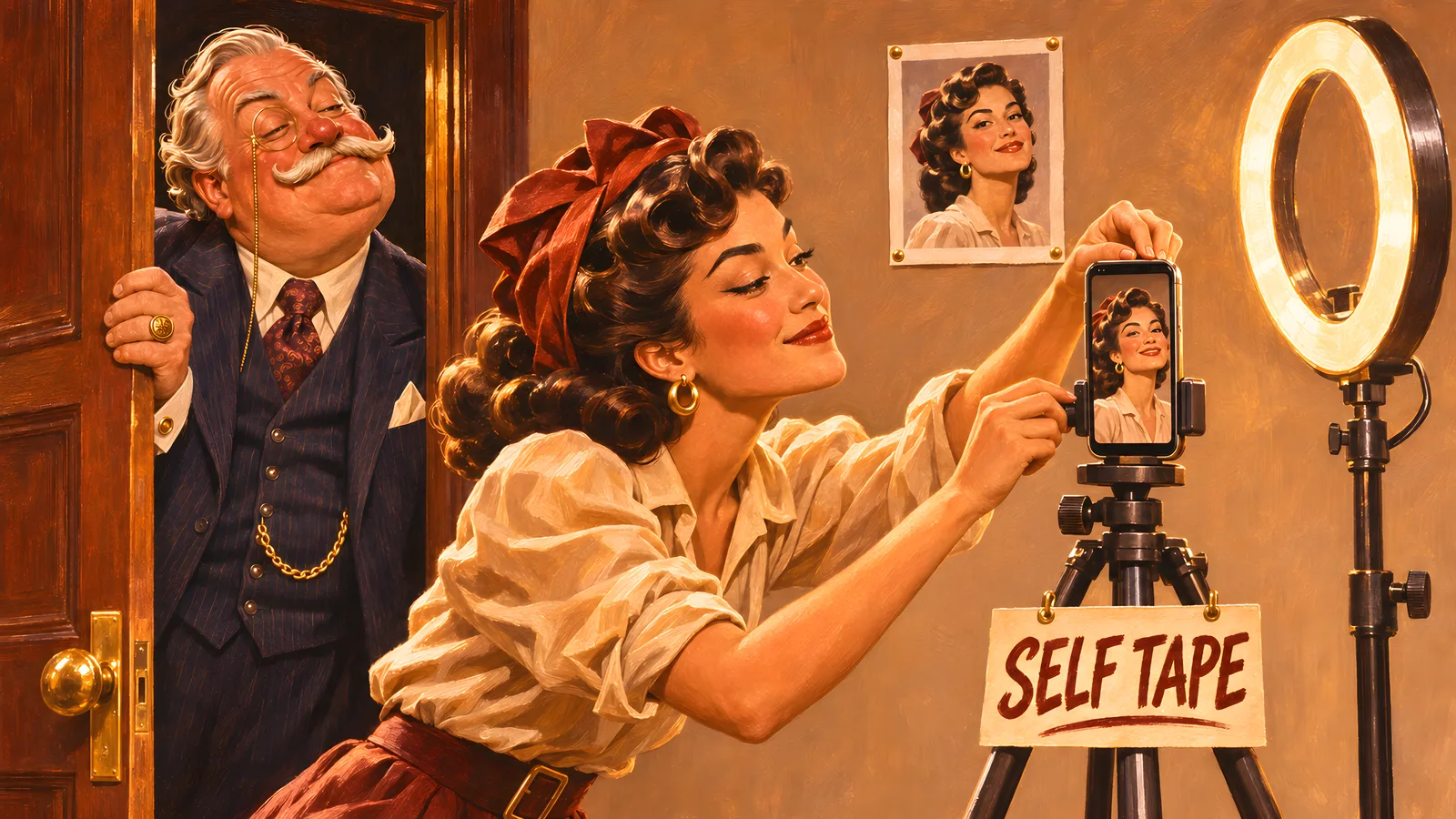
Claudia Hawkins started small. In October 2026 she told Mike Winson, who hosts Breaking The Meta, that a friend's mom took her headshots. Then she signed up on an actor casting site. Her first real audition was a vertical drama.
Before you apply, get a headshot that looks like you on a normal day. You also need a plain wall with soft light where you can prop up your phone. Record in 9:16, with the phone upright, if the casting call asks for it. Check the sound before you check your hair.
Cindy's rule is simple: "you have to submit pictures and you have to submit reels, or you're not going to get looked at." No reel yet? Your best tape becomes your reel.
Liyanne has seen some UK actors send tapes that were very natural, with hardly any grooming. She had to push them to show up the way they would for a TV commercial, with their hair combed, a bit of makeup and a clean frame. Look like the lead in a show you'd pay to keep watching.
2. Watch a few shows, then learn how to self-tape for vertical drama
You can't tape for a format you haven't seen. Watch the free episodes on a few of the big apps and notice how fast each scene gets to the emotion. A character is in love or in danger by the end of the first line.
Liyanne says the first 15 to 30 seconds are the main difference between a vertical tape and a tape for film or theater. She said you sometimes need to play it a little bigger than you would for a TV drama, because the audience has no time to work out how the character feels. It has to come across on a small phone screen.
At the Summit she said you make your first impression in the first 30 seconds to a minute. On how big to play it, she said: "try to go really big. And if you feel like that's like really over the top, keep it in." If you do a second tape, she said, pull it back a little, but never go to your bare minimum. Our Vertical Film School episode with acting coach Kent Kasper on breaking into vertical drama is worth a listen too. You can watch Liyanne's full session on replay through the Micro Drama Summit.
Practice with a real scene from any vertical script, then film it three times. Watch the first 20 seconds of each take with the sound off. If you can't tell what you're feeling, the take isn't ready.
3. Apply to everything, including background and day-player roles

Claudia went for volume and submitted for everything she could. One of those submissions turned into her first audition.
Mary Foster took it slow. In October 2026 she said the first audition scenes she read confused her. So she did background work on a few sets, then small day-player parts on a few more. She said she was hooked. In her Breaking The Meta episode, she talks about how that led to bigger roles.
Background and day-player days put you on a set, in front of a director and a casting team. Cindy says to go on set, be friendly and get to know the director and the DP (the director of photography). When someone looks difficult to work with, she said, casting has no time for them. She wants a team player. If you've never been on a set, casting you as a lead is a bigger gamble for a producer.
4. Message producers and casting directors directly on Instagram
Kasey's first booking came from a message. He had taped for the werewolf listing and heard nothing. A friend from his acting class knew the producer, so he sent the producer a note on Instagram. She told him they hadn't watched his tape yet. They went back to it, and he was booked that night. He tells the story in his Vertical Buzz episode.
Liyanne saw the same thing from her side of the desk. When she started casting verticals, her Instagram inbox filled with actors who already knew the format and wanted work. She went looking for them and built a database.
So find out who's casting the shows you like. Production companies and casting directors post on LinkedIn and Instagram. Send two lines: your name, what you taped for, and a link to the tape. Don't ask for feedback and don't send a second message the same week.
5. Show up knowing the script cold

The pace catches people out, so come ready. Liyanne says to know the script inside and out in case the lines change on the day. And stay open when the production asks for something different. For tapes, she'd rather see that you've set the scene and the character than get every line perfect. Know the words, then play the situation.
When you might shoot 13 pages in a day, cuts and rewrites are normal. Learn your lines in order and out of order. Learn the emotional beat of each scene, not just the words. If the director says "give me the same line angrier," you want to be able to do it on take two.
6. Stay freelance early, then choose roles on purpose
Kasey kept himself open on purpose. He didn't sign with the first company that hired him. Playing the field let him meet people from all kinds of backgrounds, and he said it served him very well.
Cayman Cardiff's episode covers what comes next. Going by the episode description, he talks about how he picks roles, protects his brand and deals with typecasting after breaking out on DramaBox. Early on, take what moves you forward. Once people start to know your face, read the script before you sign, and say no to the ones you wouldn't want your name on.
Liyanne said some actors have turned down roles because of the writing or what the story is about. You can do that too once you have other work.
7. Treat your social account as a second audition

Casting directors do look. Liyanne doesn't think you have to be on social media. But if you are, your account should show who you are as an actor. She suggested a separate account for acting if your personal one is mostly food and friends. She's noticed that the vertical actors who are doing well are positive with their fans.
Fans follow vertical actors, so post short clips from your tapes and sets, reply to fans, and keep it kind. You're a face people have paid to watch.
Types of vertical actor work
App originals and studio productions
These are shows with an app's name behind them, shot on a set with a full crew. Claudia said her first two verticals were shot in Atlanta, and that a lot of the work has since moved to Los Angeles. Budgets are small. The SAG-AFTRA Verticals Agreement covers productions with budgets up to $300,000.
Indie and small-company productions
Smaller companies shoot with small crews, sometimes on phones. These sets are where a lot of actors get their first credit. They're also where pay and conditions vary most. Carin Smolinski is an actress who cast her own indie series, and she tells that side of the story on our Vertical Film School episode.
International productions
The work isn't only American. Liyanne works out of London, and she recently cast one vertical with four actors in Los Angeles and more in Italy. Mary flew to Poland for two weeks to play a lead for the app Cherry Short. Daniel Jongma went from accountant to a leading name in vertical micro dramas around the world, according to his Acting Up episode page. He also runs an agency for performers called Acting Vertical.
Union and nonunion
SAG-AFTRA announced a Verticals Agreement on October 13, 2025 for productions under $300,000. SAG-AFTRA's June 2026 contract bulletin says covered episodes run about three minutes or less and must be shot entirely in the US. A union job asks for different paperwork, but the work on set is the same. Our union explainer covers what the agreement does and doesn't do for crew.
How much does a vertical actor make?
It depends on the production. Union shows have a floor. Nonunion shows set their own pay, and that varies a lot.
On union shows, SAG-AFTRA's June 2026 contract bulletin sets these minimums:
- Leads: $250 for an 8-hour day, or $468.75 for a 12-hour day.
- Other performers: $164 for an 8-hour day, or $307.50 for a 12-hour day.
Those are the same rates The Vertibase reported in February 2026. The production also pays pension and health on top. So a lead on a 10-day shoot with 8-hour days would be owed at least $2,500. Vertical days often run long, so ask whether you're booked for 8 hours or 12.
On nonunion shows, the production sets the pay. Liyanne said vertical fees still aren't as high as TV commercials, and some actors pass because of it.
Liyanne also shared what her own UK jobs pay, so treat this as one casting director's numbers, not a market rate. Leads get about $460 to $1,110 a day (350 to 850 pounds, at $1.31 to the pound), with most closer to the low end. Supporting roles get about $200 to $330 (150 to 250 pounds).
Cindy said some jobs she has seen on set paid about $200 a day for a lead and $80 for a 12-hour background day. That's what she saw, not a union rate, and it's below the union minimums above. She also worries rates are falling, so ask about the rate and the hours before you tape. We keep a separate page with posted rates by role: how much vertical drama actors make.
Credits are what raise your pay. The more finished shows you've been in, the less of a risk you are, and producers will pay more for that. Book the second one fast.
What working vertical actors say
Kasey Esser, on staying freelance, on The Vertical Buzz, September 3, 2026: he wanted to "start a bidding war" between companies instead of locking himself in with one group.
Claudia Hawkins, on her first auditions, on Breaking The Meta, October 26, 2026: "I just started submitting for everything I could, and the first real audition I got was actually for the genius and the bad boy."
Mary Foster, on starting small, on Breaking The Meta, October 5, 2026: "I did a background on a few, and then I was a day player on a few, and I kind of was just hooked on it."
Liyanne Marie, casting director, on the pace, in a Short Drama Decode video: "You're doing like up to 13 pages of script today."
Liyanne Marie, speaking at the Micro Drama Summit, on agents: "Actors do not necessarily need an agent. You know, they they don't."
Where to find vertical actor jobs
Start at our casting calls hub. If you want to be found instead of searching, the talent registry is where casting teams look for people.
Want to apply before the crowd? Pro members see new jobs first, up to 30 days before free members, which matters when a casting call fills fast.
If you're hiring a vertical actor, post the job on Vertical Drama Jobs. Casting a whole production at once? A crew call covers every role.
Outside our site, the actors above kept it simple. They answered casting listings with self-tapes, messaged producers on Instagram, and followed casting directors who post their own calls. Liyanne said she gets emails and Instagram messages from actors, so a short, polite note is fine.
Some actors go on to cast or produce. Kasey moved into producing, and our guide on how to become a vertical casting director covers one version of that path. If you'd rather shape shows than star in them, read how to become a vertical producer.
FAQ
Do you need an agent to act in vertical dramas?
No. Claudia Hawkins submitted herself, with headshots a friend's mom took, and got her first audition that way. Kasey Esser booked his first micro drama after his agent let him go. Casting director Liyanne Marie said many people book directly. If you go without an agent, check that the production is legit and that a real casting director is involved.
How long does it take to become a vertical actor?
It can take a few weeks or a few years. Kasey Esser booked his first in 2023 and has done more than 55 since. The Acting Up episode description says Daniel Jongma went from accountant to a leading name in vertical micro dramas. The Breaking The Meta show notes describe Claudia Hawkins as "one year and three verticals later."
Is vertical drama union?
Some of it is. SAG-AFTRA announced a Verticals Agreement on October 13, 2025, for productions under $300,000. Under it, leads earn at least $250 for an 8-hour day and other performers earn $164, or $468.75 and $307.50 for a 12-hour day. SAG-AFTRA's bulletin says the production also pays pension and health on top, at 21.5% from July 1, 2026.
Do you need acting experience to start?
Not a lot, but you need to show you can perform. In October 2026, Claudia Hawkins said she'd only started acting professionally around June of the year before. Her first real audition was a vertical. Liyanne Marie said casting now looks at acting more than looks, because audiences notice when the performance isn't there. To learn how a set works, start with background and day-player days.
How much do vertical drama actors get paid?
On SAG-AFTRA productions under the Verticals Agreement, leads earn at least $250 for an 8-hour day and other performers earn $164. For a 12-hour day it's $468.75 and $307.50. On nonunion shows, the production sets the pay. Liyanne Marie said those fees are still lower than TV commercials pay. Our vertical drama actor pay guide breaks down posted rates by role.
How do you self-tape for a vertical drama?
To record a self-tape, set your phone up vertically against a plain wall with soft light, unless the brief asks for a different format. Then record yourself playing the scene with feeling from the first few seconds. Liyanne Marie tells actors to grab the viewer in the first 15 to 30 seconds. Look your best, and really feel what the character feels instead of just reading the lines.
Ready to tape? Browse open roles on the casting calls hub.