How People Actually Watch Micro Dramas: Ambient Viewing and the Rise of Vertical Drama Audio
Most people don't watch micro dramas with full attention. In the one large study of the Indian market, 57 percent of viewing happens in ambient mode: the episode plays while the viewer does something else.
That one number explains a lot. It explains why vertical drama dialogue is so direct and why every want and threat gets said out loud. It also explains why a format built for glancing at a phone has turned into something people listen to. Many viewers treat a micro drama the way an older generation kept a radio serial going in the background.
This guide comes from The Vertical Frontier, Working Paper No. 1, a synthesis of Micro Drama Summit sessions, operator interviews across five markets and independent research. It covers Finding 08: the format built for glancing became a medium for listening.
Key takeaways
- 57 percent of micro drama viewing is ambient, divided-attention viewing, and it spikes during commutes and work breaks.
- Writers adopted total on-the-nose clarity, with no subtext, to survive a distracted glance. The side effect is audio-complete storytelling.
- Vertical drama may be the first video form whose stories survive intact with the screen face down.
- A catalog that works by ear is a podcast-adjacent library, and nobody distributes it as audio.
- Accessibility for blind and low-vision audiences comes nearly free when the dialogue narrates its own action.
How do people watch micro dramas?
 Mostly in the background. The largest study of the Indian market, Micro Dramas: The India Story from Meta and Ormax Media, surveyed 2,000 respondents with fieldwork from November 2025 to January 2026. It found that the episode runs while the viewer cooks, commutes, works or does something else with their eyes.
The ambient share spikes during commutes and work breaks, which fits what the working paper found about the audience more broadly. People watch in the gaps of the day: a commute, a work break, a shift where hands are busy and attention is free, the ten minutes before sleep. For more on who these viewers are, see who watches vertical drama.
Some committed viewers go further and describe rewatching a favorite series as re-listening. They already know what happens. They put it on for the voices, the rhythm and the company.
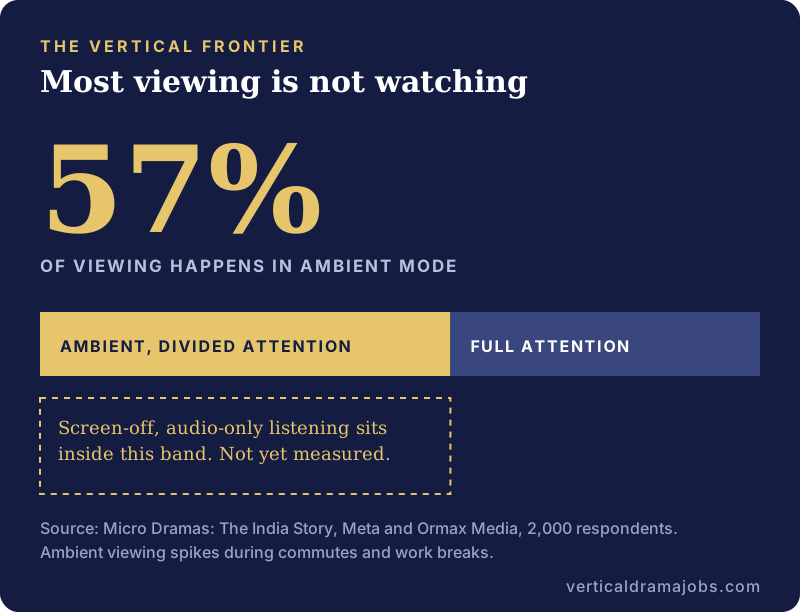 Figure: 57 percent of viewing happens in ambient or divided-attention mode versus full attention. Screen-off, audio-only listening sits inside the ambient band and is not separately measured, so it remains an unclaimed engagement mode and catalog. Ambient viewing spikes during commutes and work breaks.
What the data does and doesn't say
The India study measured divided-attention viewing. It did not separately measure screen-off, audio-only listening. That kind of listening is a reasonable extension of the finding, and committed viewers describe it, but hard data is still thin. The direction is clear. The exact size isn't.
Why is micro drama dialogue so direct?
If you've watched a vertical drama, you've noticed it. Characters say exactly what they want. They announce the threat. They explain the betrayal as it happens. Nothing is left in subtext.
That's a craft rule, and the reason is simple. The swipe punishes ambiguity. A viewer who glances up and can't tell what's going on will swipe away. So writers learned to put every want and every threat into spoken lines.
Prestige television would call that clumsy. In micro drama it's a survival skill, and it had a side effect nobody planned for.
What is audio-complete storytelling?
 When every want and threat is spoken aloud, the story no longer depends on the picture. You can follow it with your eyes closed.
The working paper calls this audio-complete storytelling. A traditional drama might hang a key turn on a look, a cut or a prop in the background, and if you miss it you're lost. A vertical drama tells you in words. That's why ambient viewing works at all: a viewer can look away for a minute, keep listening and never lose the thread. The format and the habit feed each other.
How vertical drama compares with other formats
This table shows how the main formats differ on the points that matter for listening. It's a craft comparison based on the relationships the working paper describes, not measured data.
| Prestige TV drama | Radio serial | Vertical drama (micro drama) | |
|---|---|---|---|
| Where key story beats live | Often in images, looks and subtext | In dialogue and sound | In spoken dialogue, said plainly |
| Can you follow it without the screen? | Often not | Yes, by design | Mostly yes, as a side effect of the craft |
| Typical attention mode | Full attention | Background listening | Often ambient, divided attention |
| Built for | The screen | The ear | The glance, which made it work for the ear |
Is vertical drama the new radio serial?
In a sense, yes. The working paper makes the comparison directly, and puts it this way: "More often than it realizes, it makes radio for people who can't stop working."
The industry still thinks of itself as a video business. It measures views, completion and swipes, and it makes content for people who won't stop scrolling. Yet a large share of its audience is listening while doing something else.
Is there an audio opportunity in micro drama?
The working paper names three things nobody has claimed yet.
A catalog nobody distributes as audio
Whole libraries of vertical drama episodes already carry their story in dialogue, and nobody distributes them as audio. That's an open lane for distribution, for packaging, and for people who know audio.
A listening mode nobody measures
Platforms track what they can see on the screen. Listening with the phone face down falls outside most of that, so nobody measures or monetizes it. Whoever learns to measure it first will understand the audience better than everyone else.
Accessibility that comes nearly free
A format whose dialogue narrates its own action is already most of the way to accessible for blind and low-vision audiences. It costs far less than in formats that tell their stories through images. That's good for audiences, and it widens the market.
Why sound matters more in vertical drama than people think
If a large share of the audience is listening more than watching, the audio track does more of the storytelling than most productions budget for. Dialogue clarity, a clean mix and voices that are easy to tell apart all matter more when nobody is looking at the screen.
It also connects to another finding from the same paper: the payment system wrote the grammar of vertical drama. Episode structure came from the paywall (see why vertical drama cliffhangers hit at episode 10), and the dialogue style came from the swipe. In both cases the craft grew up around how the product is consumed.
What this means for your career
If people listen more than they watch, the jobs that shape what they hear matter more than the industry has priced in.
Writers
Write so the episode works with your eyes closed. Read your script aloud, or have someone read it to you without the page in front of you. If a key turn only lands because of a look or an insert shot, put it in the dialogue. Give characters distinct ways of speaking so a listener knows who is talking. For more on script craft, see how to write a vertical drama script, and browse vertical drama writer jobs.
Actors
Your voice carries more of the performance than you might expect. A good share of the audience may hear your lines without ever seeing your face. Work on clarity, distinct vocal choices and emotional range in the voice. Viewers who re-listen to favorites are spending time with your voice, so it builds the fan relationship too. See open casting calls.
Sound and post-production crew
Production sound, dialogue editing and mixing do more of the storytelling than the budget usually reflects. If you work in sound, make the case that dialogue clarity affects retention as well as polish. Editors can check their cuts with the picture off. Look for sound jobs and editor jobs.
Producers and platform teams
Ask what your catalog is worth as audio. Ask how your audience consumes it when the screen is face down. Treat accessibility as a feature the format already half delivers. These questions are still open, and the people who answer them first will own the lane. See producer jobs.
Frequently asked questions
How do most people watch micro dramas?
Mostly while doing something else. See the India study numbers above: 57 percent of viewing is ambient, and it spikes on commutes and work breaks.
Why is dialogue in vertical dramas so on the nose?
The swipe punishes ambiguity. A viewer who can't tell what's happening swipes away, so writers say everything out loud. It also makes the stories easy to follow by ear.
Can you listen to a vertical drama without watching it?
Usually, yes. Because the dialogue narrates the action, most of the story survives with the screen face down. Screen-off listening hasn't been separately measured, though.
Are micro dramas available as audio or podcasts?
Not yet, according to the working paper. Nobody currently distributes vertical drama catalogs as audio.
Are vertical dramas accessible for blind and low-vision viewers?
They have a head start. Dialogue that narrates its own action does much of the work that audio description does elsewhere.
What study found 57 percent ambient viewing?
Micro Dramas: The India Story, by Meta and Ormax Media. It covers the Indian market only.
Sources and notes
- The Vertical Frontier, Working Paper No. 1 (2026), by Chi Odogwu: Finding 08, aggregate synthesis of Micro Drama Summit sessions, operator interviews across five markets and independent research.
- Ambient viewing: 57 percent of viewing happens in ambient mode, with spikes during commutes and work breaks, per Micro Dramas: The India Story (Meta and Ormax Media, fieldwork November 2025 to January 2026, 2,000 respondents). The study covers divided-attention viewing. Screen-off, audio-only listening is a reasonable extension but is not separately measured.
- Viewing moments (commute, work break, busy-hands shifts, before sleep) come from the working paper's audience synthesis.
Figures are illustrative of the relationships described and are directional rather than audited.