Who Watches Vertical Drama? Micro Drama Audience Demographics in 2026

The core vertical drama audience is women, roughly 25 to 65, with most of them between 35 and 54. Many are heavy romance readers. They watch in the gaps of the day: the commute, the work break, a shift where their hands are busy and their attention is free, and the last ten minutes before sleep.
If you work in micro drama, that profile matters more than the short answer suggests. Who the audience is, and when they watch, shapes what gets written, who gets cast and which jobs exist.
This guide comes from The Vertical Frontier, Working Paper No. 1, a synthesis of Micro Drama Summit sessions, operator interviews across five markets and independent research. It covers the demand side of one of the paper's eight findings, plus the audience research behind it.
Key takeaways
- The core Western audience skews female, roughly 25 to 65, centered on 35 to 54.
- Many viewers are romance readers who came for the same fantasy in a faster form.
- The audience is broadening. On some platforms the male share is heading toward 30 percent.
- Much of the viewing is background viewing. In one large study, 57 percent happened in ambient mode, with the screen running while the viewer did something else.
- Heavy viewers follow performers across apps. Some keep upwards of 40 vertical apps installed to follow specific performers.
Who watches vertical dramas?
Start with the numbers that exist. A survey of more than 1,600 viewers by Vertical Drama Love, reported through Digital Content Next and Deadline in 2025 and 2026, found a core Western audience that skews female, roughly 25 to 65, with the bulk in the 35 to 54 range.
People outside the industry are surprised by that. The format lives on phones, so they assume it belongs to teenagers and twenty-somethings. The research says otherwise. The typical center-of-the-audience viewer is a woman in midlife with a job, a commute and not much free time.
It explains a lot about the content, too. Vertical drama is direct, emotional and built around fantasy: the reveal, the reversal, the moment someone finally gets what they deserve. It's made for one specific person.
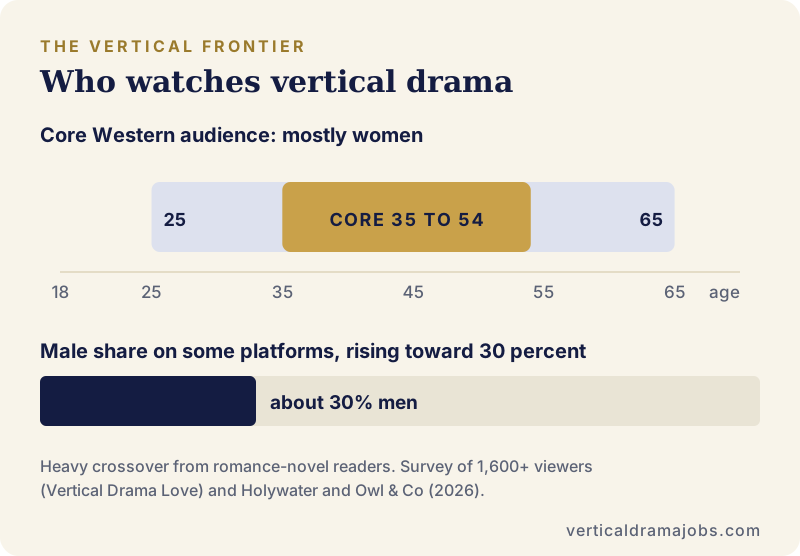 Figure: The core Western vertical drama audience by age, skewing female and concentrated between 35 and 54. Based on the Vertical Drama Love viewer survey as reported by Digital Content Next and Deadline.
Why do women watch short dramas?
Romance is the clearest answer in the research. Many core viewers are heavy romance readers, and they came to vertical drama for the fantasy they already loved on the page.
A romance reader already understands tropes, slow burns and payoffs. She knows what she wants from a story. Micro drama hands it to her in episodes of a minute or two, on a device already in her hand, in moments she couldn't use for a novel.
The second answer is time. This audience doesn't sit down for a two-hour film on a weeknight. It watches in the cracks between other obligations, and a format built from short episodes fits a life that comes in short pieces. A familiar fantasy, sized for a busy day.
For a broader look at the format itself, see what is a vertical drama.
Is the vertical drama audience changing?
Yes, it's broadening. The State of Microdrama 2026 report from Holywater and Owl & Co, reported by Variety, found the male share on some platforms rising toward 30 percent.
Women remain the center. But the edges are moving, and genre is likely to widen with them. The Vertical Frontier notes that China, the originating market, already went through a widening of genre, and Western markets tend to follow its phases at a lag.
We've written more about this shift in the untapped opportunity in verticals: the male audience.
When do people watch micro dramas?
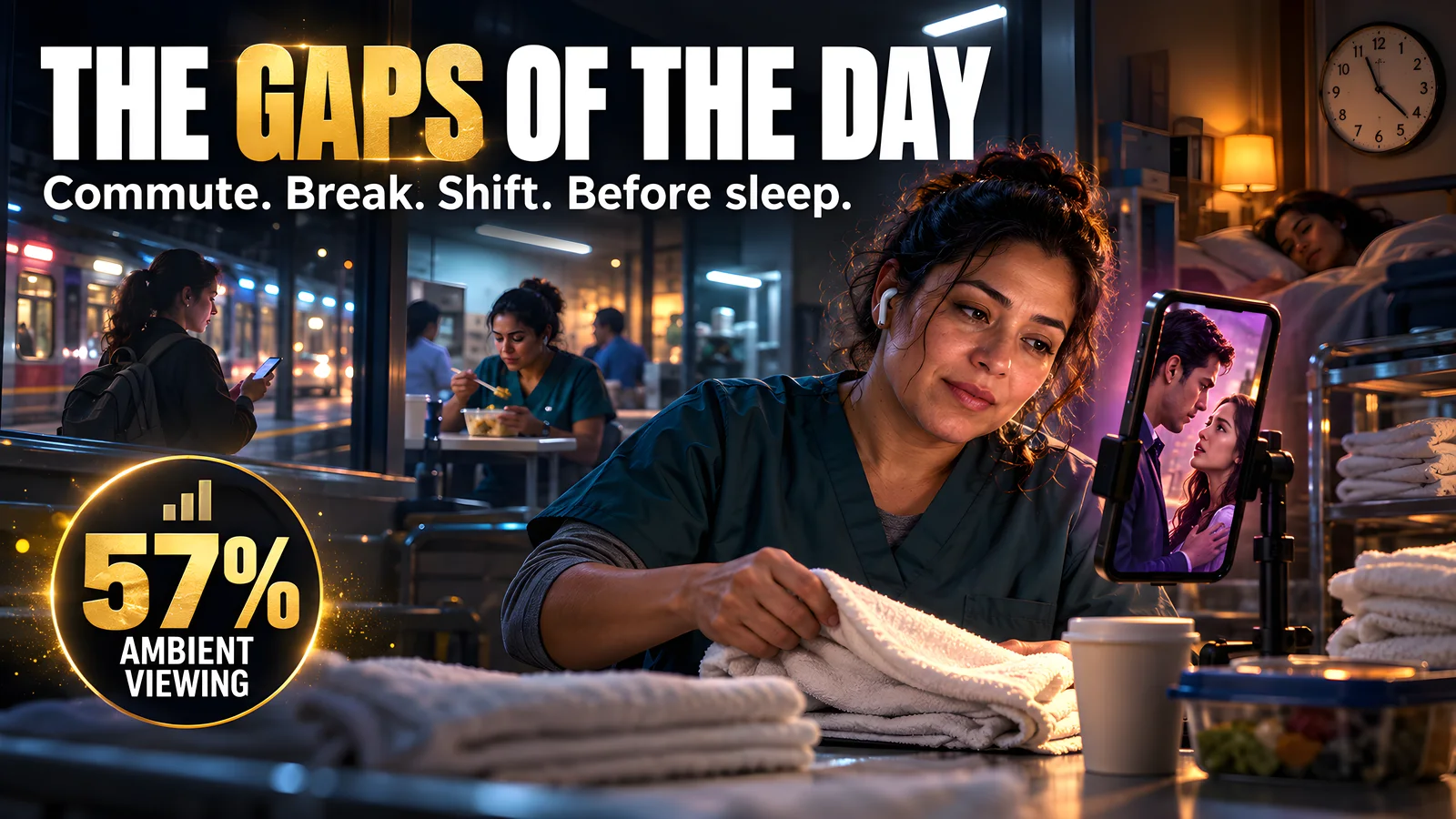 In the gaps. The working paper describes the audience's relationship to time as the commute, the work break, the shift where hands are busy and attention is free, and the ten minutes before sleep.
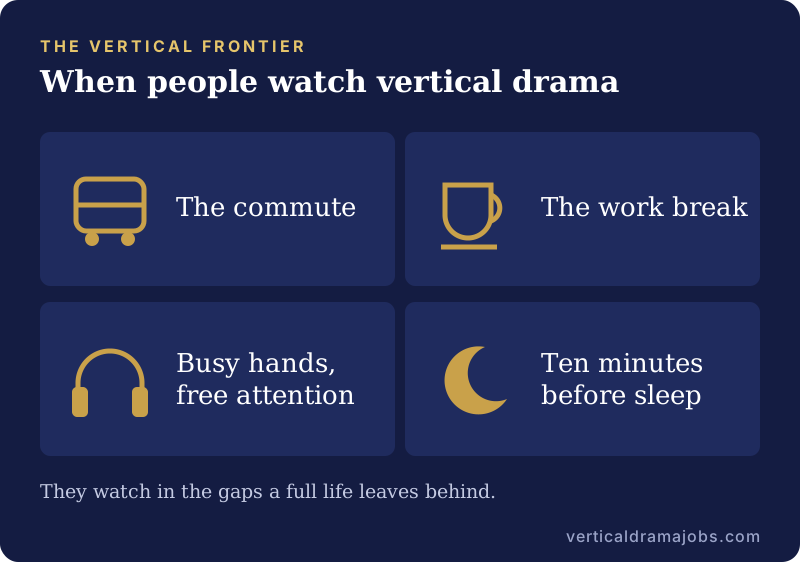 Figure: The moments when people watch micro dramas, drawn from The Vertical Frontier and the India study on ambient viewing. Illustrative, not a measured share of viewing time.
Watching while doing something else
Some of that time isn't really watching. Micro Dramas: The India Story, a study by Meta and Ormax Media with 2,000 respondents and fieldwork from November 2025 to January 2026, found that 57 percent of viewing happens in ambient mode. The episode plays while the viewer does something else, and it spikes during commutes and work breaks.
That study covers India, and it measures divided attention, not screen-off listening. Still, it fits the pattern in the rest of the research: a format that lives in the background of a busy day.
Overlooked time
The paper has a useful way to put it. The micro drama ecosystem runs on overlooked time. On one side of the camera, a workforce subsidizes low budgets with second jobs and reduced rates. On the other, an audience gives the format fragments of attention nobody else was competing for. Neither half shows up on a balance sheet.
The supply side is covered in why vertical drama budgets are so low. For the listening side, see how people really watch vertical drama.
| Viewing moment | What the viewer's day looks like | What it asks of the story |
|---|---|---|
| Commute | Moving, often interrupted | Clear stakes, easy to pick up again |
| Work break | Short, fixed window | A complete beat and a reason to come back |
| Busy-hands shift | Eyes elsewhere, ears free | Dialogue that carries the plot |
| Before sleep | Winding down, alone | Emotional payoff, a hook for tomorrow |
Why do fans follow micro drama actors across apps?
 Heavy viewers follow performers, and the platform comes second. A later fan survey from the same group found the most engaged viewers were led mainly by favorite actors, and some carried upwards of 40 vertical apps.
Nobody keeps 40 apps because they love 40 platforms. They keep them to follow specific performers wherever those performers turn up next. The platform is a container, and the actor is the reason to open it.
The paper adds two details. The tools these viewers ask for are indexed by people, not titles: find an actor, then find everything that actor has made. And there's a counterfeit problem, with impersonators posing as accessible performers. Fraud gathers around whatever is valuable, and here it gathers around the bond between fans and actors.
The paper's broader conclusion is that this bond is the only durable asset in the industry. Shows are spent media the day they air, while a following travels. More on that in why vertical drama actors with an audience outlast platforms.
What this means for your career
Writers
Write for the woman at the center of the audience. She reads romance, she knows the tropes and she wants the payoff. Don't write down to her.
Write for the gaps, too. Each episode has to land a clear beat in a short window and give a reason to come back. Since so much viewing happens in the background, dialogue should carry the story even when nobody's looking at the screen. For the craft side, start with how to write a vertical drama script.
Keep an eye on the edges. If the male share keeps rising, genre widens, and writers who can work beyond core romance will find more doors open.
Actors
The audience follows faces, and that's your opening. Build a following that knows your name and will look for you on the next app. Make it easy to find all of your work in one place, because fans search by person.
Protect your identity as well. Impersonators target performers whose fans are worth reaching, so keep your official channels clear and consistent. For the money side of acting in this format, see how much vertical drama actors make.
Producers, marketers and platform staff
Know who you're selling to: women 35 to 54, many of them romance readers, watching in fragments. Campaigns, casting and release timing should fit that life, not the stereotype of a teenage scroller.
And treat performers as audience assets. If fans follow faces across 40 apps, the people who can build and keep those relationships, in marketing, community and casting, are doing some of the most valuable work in the business.
Frequently asked questions
Who is the main audience for vertical dramas?
Women, roughly 25 to 65, mostly between 35 and 54. Many are heavy romance readers. The age profile is above.
Do men watch micro dramas?
Yes, and their share is growing. Women are still the core, though.
Why are micro dramas so popular with romance readers?
Same fantasy, faster form. Short episodes fit into commutes, breaks and the minutes before sleep, when a novel is hard to pick up.
How do people watch micro dramas?
Often in the background, with the episode running while they do something else. See the India study above.
How many vertical drama apps do fans use?
Heavy viewers keep dozens, mainly to follow specific actors from platform to platform.
What does the micro drama audience mean for job seekers?
Writers who understand romance and write clear dialogue have an edge. Actors with a following that travels with them are protected when platforms change. And marketing and community roles that manage fan relationships matter more than many people expect.
Sources and notes
- Audience age and gender: Vertical Drama Love survey of 1,600+ viewers, via Digital Content Next and Deadline, 2025 to 2026.
- Male share rising toward 30 percent on some platforms: Holywater and Owl & Co, The State of Microdrama 2026, via Variety.
- Ambient viewing at 57 percent, spiking during commutes and work breaks: Micro Dramas: The India Story, Meta and Ormax Media, fieldwork November 2025 to January 2026, 2,000 respondents. Covers divided-attention viewing, not screen-off listening.
- Following performers across apps, some viewers carrying upwards of 40 vertical apps: Vertical Drama Love, via Deadline, December 2025.
- Viewing in the gaps of the day and the overlooked-time framing: The Vertical Frontier, Working Paper No. 1 (2026), Chi Odogwu.
- Figures are illustrative of the relationships described and are directional rather than audited.