Is It Too Late to Get Into Vertical Drama? How Long the No Gatekeepers Window Stays Open

It's not too late to get into vertical drama, but the "no gatekeepers" era is a phase, not a permanent feature. The gates are closing one layer at a time, in the same order they opened: acting, then casting, then distribution, then writing, then platforms.
Each layer stays wide open for roughly twelve to eighteen months before it formalizes. Writing is the layer formalizing now. That tells you where newcomers can still get in and how much time you likely have to do it.
This guide comes from The Vertical Frontier, Working Paper No. 1, a synthesis of Micro Drama Summit sessions, operator interviews across five markets and independent research. It covers Finding 06, which the paper calls "openness is a phase, and the gates close in the order they opened."
Key takeaways
- "No gatekeepers" is the micro drama industry's most repeated promise, and almost every practitioner's own story disproves it.
- Each layer has a half-life of roughly twelve to eighteen months of openness before it formalizes.
- The order is acting, casting, distribution, writing (closing now) and platforms.
- Terms can change inside a single production cycle. Licensing that looked generous at the start tightened by the time some projects finished.
- You can see which gate closes next. Move before it does.
Is it too late to get into micro drama?
 Not too late, no. Which door you want decides how much time you have.
The paper's directional model shows the layers of the industry opening and then formalizing in sequence over about 36 months. Acting formalized first, around month 6. Casting followed around month 14, and distribution around month 20. Writing is formalizing around month 25, which the paper marks as "closing now." Platforms come last, around month 30.
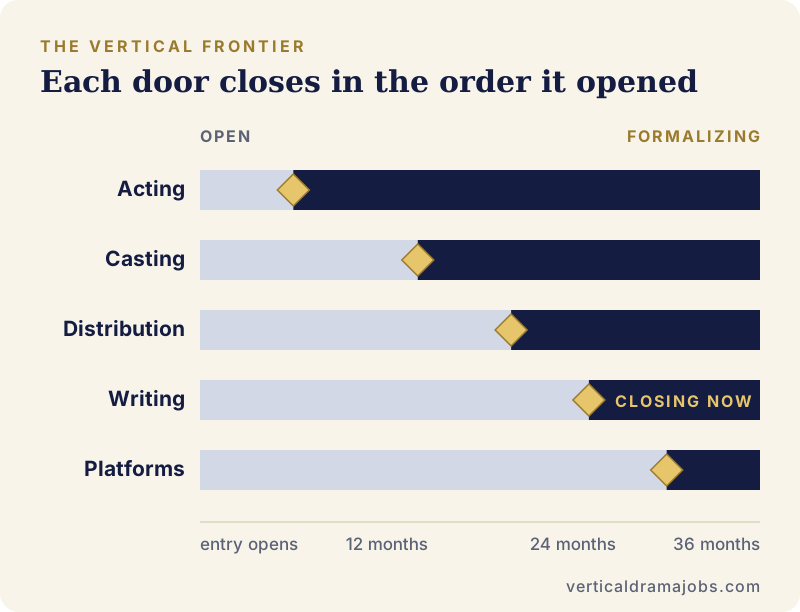 Figure: Industry layers open, then formalize in sequence over about 36 months: acting (about month 6), casting (about month 14), distribution (about month 20), writing (about month 25, closing now), platforms (about month 30). Directional estimate from the aggregate synthesis, not audited data.
"Closed" doesn't mean locked. It means formalized. There are now steps between you and the work that didn't exist before: an audition through a specialist, a standard contract, a guild rule, a brief you have to meet. You can still get through. You just need more to do it.
Why "no gatekeepers" was never fully true
The promise is everywhere in vertical drama: anyone can act, anyone can write, anyone can produce. Ask practitioners how they got their break, though, and the story usually involves a gate.
Casting directors, marketplaces, award shows, unions, standard contracts, detailed briefs and paid training aren't built by villains. A market's first specialist casting director appears. The physical marketplace where distribution happens appears. Each was built by a well-meaning pioneer, each makes the industry better in some way, and each raises the floor a newcomer must clear. That's what maturing looks like.
How fast do vertical drama gates close?
The paper estimates a half-life of roughly twelve to eighteen months per layer. That's the author's estimate from the aggregate synthesis, not an audited measurement, but the pattern shows up again and again.
The market can change inside one production
Practitioners who ran the full course, from production through to distribution, saw licensing terms that looked generous at the start tighten by the time the project finished months later. The market restructured inside one production cycle. You can start a project in one market and deliver it into another.
Do markets outside the US close faster?
Probably. The paper's first finding is that newer markets skip stages, importing the endpoint lessons without living through the mistakes in between. It doesn't put a separate gate timeline on them, but if you're working in a newer region, assume the windows are shorter, not longer. More in the global market timeline guide.
The order the gates close, layer by layer

| Layer | What formalizes it | Directional close |
|---|---|---|
| Acting | Casting formalizes around it | About month 6 |
| Casting | Specialist casting directors appear | About month 14 |
| Distribution | A physical marketplace appears | About month 20 |
| Writing | Guild rulings, standard contracts, detailed briefs, paid training | About month 25 (closing now) |
| Platforms | Last layer to formalize in the model | About month 30 |
The sequence works like a chain. Acting opened, then casting formalized. Distribution opened, then the marketplace formalized. Each layer's openness invites people in, and some of them build the structure that formalizes the next layer.
Do vertical drama casting directors make it harder to get cast?
They make it different. When a market's first specialist casting director appears, the industry gains taste, consistency and a known route to talent. Newcomers lose the chance to book work simply by showing up.
Once casting formalizes, relationships with casting directors matter more than the open call. Acting and casting are the earliest layers to formalize in the paper's model, so your edge now is less about access and more about what you bring with you. The paper's third finding argues that a following is the most durable asset a performer can have. See the parasocial moat guide and the 2026 actor pay guide.
Why is vertical drama writing "closing now"?
You can see it in what has already happened. The WGA ruled that vertical drama work falls under its minimum basic agreement and warned members off non-signatory productions (John August; Variety). On the performer side, SAG-AFTRA signed its Verticals Agreement on October 13, 2025, for productions under $300,000.
Add detailed briefs, paid training and more standard contracts, and writing starts to look like other mature screen industries. Writers can still break in. But the window where a strong spec and a fast turnaround got you hired without any of that structure is narrowing.
For the pay side, read how much vertical drama writers get paid per script. For the practical route in, see vertical drama writer jobs: how to break in.
How to break into vertical drama with no experience
The paper's advice is simple: see which gate closes next, and move before it does. In practice:
- Pick the layer that's still open, not the one you wish was open. Platforms are last to formalize. Writing is closing now. Acting and casting went first.
- Get produced credits while they're cheap to get. Before a layer formalizes, a finished credit is the fastest way through. After, it becomes the minimum.
- Learn the gates instead of resenting them. Know who the casting specialists are in your market, how distribution is handled and what briefs look like.
- Watch your terms during long projects. Get the deal in writing early.
- Follow the industry, not just the job listings. New gates tend to show up first as announcements: a new agreement, a new marketplace, a new award.
If you're starting from zero, our 2026 guide to getting hired in vertical drama covers the basics, and the complete guide to vertical drama explains the format itself.
What this means for your career
Writers
You're in the layer that's formalizing right now. Use the time to build a body of produced work under clean terms, and decide your position on guild membership before a deadline forces the question. Expect more detailed briefs and more structured hiring, and get good at both.
Actors
Build real relationships with the casting specialists in your market, and treat union minimums as floors. Most of all, invest in an audience that follows you. That relationship travels with you when a platform doesn't.
Crew and producers
Distribution formalized around a physical marketplace, so learn how it works before you shoot, not after. Lock licensing terms early. Crew members should treat early credits as the asset they are.
People who want to build platforms or tools
Platforms are the last layer to formalize, which makes this the most open door in the model. It's also the one with the most expensive mistakes, and the door still closes on a schedule.
Frequently asked questions
Is it too late to get into micro drama in 2026?
No. Formalizing isn't the same as closing. Newcomers can still break in, with more structure to work through than before.
Can you get into vertical drama with no experience?
Yes, and people still do. The easiest time is before a layer formalizes, when a finished credit gets you noticed. After that you'll need relationships, a standard contract and a match to a detailed brief.
Do vertical drama actors need a casting director?
Not always, but more often over time. See the casting section above.
How long does the vertical drama window stay open?
Roughly twelve to eighteen months per layer, with all layers formalizing over about 36 months. That's a directional estimate, not an audited measurement.
Which part of vertical drama is still the most open?
Platforms, the last layer to formalize. Writing is formalizing now.
Why do licensing terms change during a vertical drama project?
The market is restructuring fast. Lock terms early and in writing.
Sources and notes
- The Vertical Frontier, Working Paper No. 1 (2026), Chi Odogwu. Finding 06, aggregate synthesis of Micro Drama Summit sessions, operator interviews across five markets and independent research.
- The layer-closing cadence (about twelve to eighteen months per layer, and the month estimates for each layer) is an author's directional estimate from the aggregate synthesis, not an audited measurement.
- Variety and Deadline, October 2025; Mondaq, 2026: SAG-AFTRA Verticals Agreement, signed October 13, 2025, covering productions under $300,000.
- John August; Variety: WGA ruling that vertical drama work is covered by its minimum basic agreement, and the warning on non-signatory productions.
Figures are illustrative of the relationships described and are directional rather than audited.